
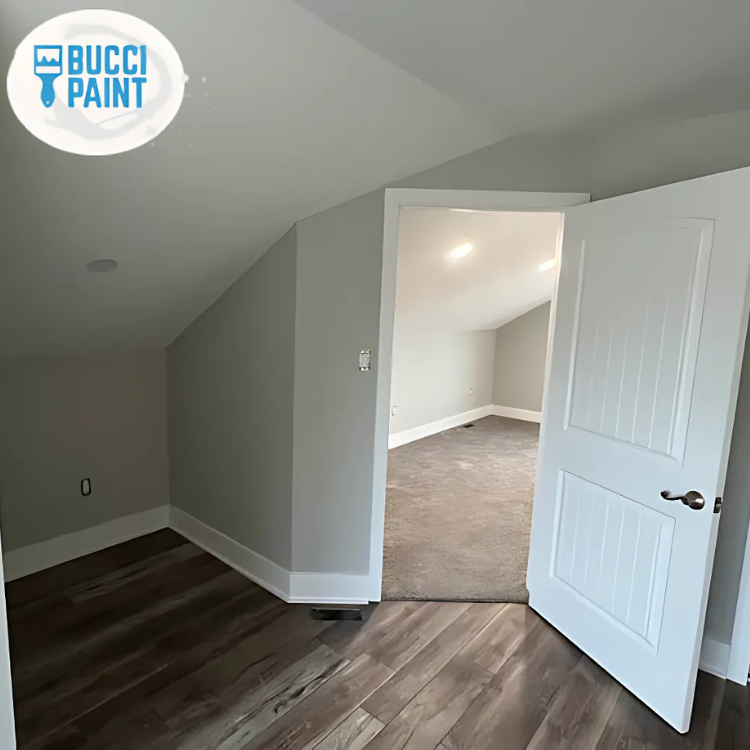
Interior Painting: Create Flow Between Living Areas
On a typical evening in Evesham, you might walk from your kitchen into the family room and feel it immediately: a subtle visual “jolt” where one paint color stops and another begins. The layout is open, but the spaces don’t quite feel connected. That disconnect is more common than you’d think. According to the National Association of Home Builders, open-concept layouts remain one of the top requested features in modern homes, yet many homeowners say their interiors still feel choppy or disjointed.
For South Jersey homeowners, especially in towns like Evesham, Marlton, and neighboring communities, creating a smooth visual flow between living areas is more than a design trend. It affects how welcoming your home feels, how easy it is to entertain, and even how potential buyers perceive your property’s value.
This guide walks through how strategic interior painting, thoughtful color transitions, and a few smart upgrades can tie your living spaces together. You’ll learn how pros approach color planning, where to use contrast vs. continuity, and how related services like drywall repair, trim upgrades, and even exterior work support a cohesive home.
Key Insight: The right interior paint plan doesn’t just refresh walls; it creates a continuous visual story from room to room, making your home feel larger, calmer, and more intentional.
Why “Flow” Matters in Modern South Jersey Homes
Open floor plans are common in Evesham’s newer developments and renovated older homes, but paint choices often lag behind the architecture. Many homes still show a “patchwork” of colors chosen room-by-room over several years. The result: visual clutter and a sense that spaces are competing rather than working together.
Flow between living areas matters because it:
- Impacts how large or small your home feels
- Affects mood and comfort (especially in high-use spaces like kitchens and family rooms)
- Influences resale appeal and perceived quality
The American Institute of Architects notes that cohesive color schemes and clean transitions are among the top visual cues buyers associate with “well-maintained” homes.
In a recent Bucci Paint project off Route 70 in Evesham, the homeowners had a two-story foyer painted in a bright yellow, a gray living room, and a warm beige kitchen. Each color looked fine alone, but together they felt disjointed. We created a unified palette with a soft greige running through the main areas, then used a deeper accent in the dining room and a slightly warmer tone in the kitchen. The layout didn’t change—but the house suddenly felt designed as one continuous home, not a collection of separate rooms.
Building a Whole-Home Color Strategy (Not Just Picking a Color You Like)
A cohesive interior starts with a whole-home plan, not a single swatch you fall in love with in the paint aisle. Professional Interior painting always begins with understanding how light, layout, and function interact.
Key elements of a flow-focused color plan
- A primary “background” color that runs through hallways, main living areas, and sightlines
- 1–2 secondary colors for adjacent spaces (kitchens, dining areas, home offices)
- Limited, intentional accent colors used to highlight architecture or specific zones
“Think of your main color as the soundtrack of your home—consistent, calm, and present in the background.” — Bucci Paint Design Team
In one Evesham split-level, the homeowner loved deep blue. Rather than painting the entire family room dark (which would have felt heavy), we used a soft off-white as the primary color, repeated through the foyer and hallways. The deep blue became an accent on the TV wall and in the adjacent powder room. Because everything tied back to the same neutral, the bold color felt sophisticated instead of overwhelming.
Traditional vs. Modern Approach to Color Selection
| Approach | Traditional Room-by-Room | Whole-Home Flow-Focused |
|---|---|---|
| Color choice | Different color per room | Palette shared across spaces |
| Basis for decisions | Personal preference only | Light, layout, and sightlines |
| Effect on space | Choppy, visually busy | Calm, connected, spacious |
| Resale appeal in Evesham | Can feel dated | Seen as updated, move-in ready |
| Typical repaint cycle | Sooner (colors age faster) | Longer (neutrals and coordinated tones age better) |
Working with a professional painting company also lets you test colors in your actual lighting—South-facing windows in a Marlton colonial will read very differently than a shaded Evesham townhome. We often apply large test patches and view them at several times of day before finalizing.
Managing Transitions: Where One Room Ends and Another Begins
Once you’ve chosen a palette, the real art is in the transitions—how colors meet at corners, openings, and trim lines. This is where many DIY projects fall short and where professional Residential Interior Painting really shows its value.
Common transition challenges
- Open concept kitchen–living rooms with no obvious “stop” point
- Long hallways feeding multiple rooms with different colors
- Two-story foyers visible from upstairs halls and downstairs living areas
In a newer Evesham development, we worked on a home where the kitchen, dining area, and family room were one continuous L-shaped space. The homeowner originally wanted three different wall colors. Instead, we recommended a single main color throughout and used:
- A slightly darker shade on the kitchen island
- A different sheen (eggshell vs. matte) to subtly define the kitchen area
- The same trim color and profile throughout to unify the whole level
The result: each zone felt defined by furniture and lighting, but the walls created a seamless backdrop.
Transition strategies that create flow
- Use door casings and cased openings as natural color breaks. Paint one side of the casing to match the room it faces.
- Carry the same trim and door color throughout. This acts like a visual “frame” tying spaces together.
- Avoid harsh, high-contrast changes at outside corners. If two colors must meet, choose related tones or use a small section of neutral as a buffer.
“Flow isn’t just about color—it’s about where your eye naturally rests as you move through the home.” — Senior Project Manager, Bucci Paint
For homes that need more than paint to fix awkward transitions—like damaged corners, uneven walls, or poorly patched openings—combining paint with professional drywall install and repair can make a dramatic difference. A clean, straight corner with crisp paint lines feels intentional; a wavy, patched one breaks the flow no matter what color you choose.
Using Trim, Doors, and Architectural Details to Tie Rooms Together
Color isn’t the only tool for creating flow. The details—baseboards, crown molding, door styles, and flooring transitions—play a huge role in whether your home feels cohesive or cobbled together.
In many Evesham homes, especially those built or renovated over multiple decades, we see a mix of:
- Different baseboard heights from room to room
- Mismatched door styles and hardware
- Varying trim colors (bright white in one room, creamy in another)
Even with a consistent wall color, these inconsistencies can make your home feel visually noisy.
How trim and doors support flow
- Consistent trim color provides a unifying “frame” around every opening and edge
- Matching door styles and finishes create rhythm as you move down a hallway
- Crown molding and wainscoting can visually connect spaces, especially in open dining–living areas
In a recent project near Evesham’s Blue Barn neighborhood, a client wanted their main level to feel more polished without a full remodel. We:
- Standardized all baseboards to a 5¼” profile
- Repainted all trim and doors in the same satin white
- Added simple crown molding in the living and dining rooms
- Repainted walls in a coordinated palette
The transformation was significant. The house suddenly felt like it had been designed all at once, even though it had been updated in stages over the years.
If you’re considering upgrading beyond paint, services like Trim and Door Installation and even light Carpentry Services can be planned alongside your painting project. This not only improves flow but also reduces disruption—one coordinated schedule, one crew, one clean-up.
Connecting Interior Flow to the Exterior and Outdoor Living
Flow doesn’t stop at the back door. In South Jersey, where decks and patios are heavily used from spring through fall, the transition between indoor living areas and outdoor spaces has a big impact on how your home feels and functions.
Why interior–exterior continuity matters
- Sliding doors and large windows visually connect your family room or kitchen to the deck
- A cohesive color story makes the home feel larger and more resort-like
- Well-maintained exteriors support the sense of quality you create inside
For one Evesham home backing up to a wooded area, the family room opened directly onto a large deck. Inside, we used a warm greige with white trim. Outside, the deck had faded, peeling stain in a reddish tone that clashed with the interior. We:
- Refinished the deck with a modern, neutral tone through Deck Staining and Deck Painting services
- Touched up the exterior trim color to match the interior trim
- Ensured the view from inside framed a clean, cohesive outdoor space
Suddenly, opening the sliding door felt like expanding the family room, not stepping into a mismatched zone.
Interior vs. Exterior: Coordinated, Not Identical
| Element | Interior Focus | Exterior Focus |
|---|---|---|
| Primary goal | Comfort, mood, and visual flow | Protection, curb appeal, durability |
| Color relationship | Harmonious with furnishings | Harmonious with roof, masonry, landscape |
| Maintenance in Evesham climate | Touch-ups as needed | Scheduled Exterior painting and masonry/stucco coatings |
| Example of continuity | Matching trim tones and accent colors | Coordinated door and shutter colors |
Coordinating your interior project with exterior work—whether that’s a fresh coat of Exterior Painting or updating your deck—can create a true “inside-out” living experience, especially important in neighborhoods where outdoor entertaining is a big part of life.
When a Fresh Coat Isn’t Enough: Repairs, Remodeling, and Cabinets
Sometimes paint alone can’t fully solve flow issues. Structural quirks, damaged surfaces, or dated built-ins can break the visual line from room to room, no matter how carefully you choose colors.
Common issues we see in Evesham homes
- Poorly patched drywall where walls were removed to open up a space
- Old soffits or bulkheads that interrupt sightlines between kitchen and living areas
- Dated, dark cabinetry that visually “weighs down” an otherwise bright open floor plan
In a local kitchen–family room project, the homeowners had already opened up a wall but were disappointed with the result. The drywall seams were visible, the ceiling line wasn’t level, and the old oak cabinets clashed with their new, lighter aesthetic. To fix the flow:
- Our team performed professional drywall install and repair to straighten lines and smooth transitions
- We updated trim profiles to match throughout the open space
- The kitchen received a cabinet refresh, including paint and minor general remodeling adjustments
“Paint enhances what’s there. When the underlying surfaces and structures are right, the results look magazine-worthy.” — Bucci Paint Project Lead
For homeowners considering bigger changes, combining interior painting with General Remodeling and even Custom Cabinetry solutions can be the most efficient path. Planning everything together ensures:
- Consistent style choices across materials
- Fewer surprises once painting starts
- Better long-term durability and fewer callbacks
What Flow-Focused Painting Means for Homeowners in Evesham, NJ
For homeowners in Evesham and nearby South Jersey communities, creating flow between living areas isn’t just about following design trends. It’s about making your home work better for the way you actually live—hosting family gatherings, working from home, or simply relaxing at the end of a long day.
Local homes range from 1970s colonials and split-levels to newer developments and townhomes. Many have been updated piece by piece over the years. That’s where thoughtful, whole-home Interior painting makes such a difference:
- Older homes benefit from unified colors that bridge additions, renovations, and original spaces.
- Newer open-concept homes gain warmth and definition without losing their airy feel.
- Homes preparing for sale in Evesham’s competitive market stand out with cohesive, move-in-ready interiors.
Local climate also plays a role. South Jersey’s strong seasonal light shifts mean colors can look very different in winter vs. summer. Working with a local painting company that understands how shades read in our specific light conditions helps ensure your home feels inviting year-round.
Finally, Evesham’s active lifestyle—with kids’ sports, pets, and frequent entertaining—demands durable, easy-to-clean finishes. Professional planning includes not just color, but also sheen and product selection that stand up to real life without sacrificing beauty.
Bucci Paint has helped many Evesham homeowners turn “good bones” into homes that feel intentionally designed from the front door to the back deck. When flow is done right, guests may not be able to pinpoint why your home feels so comfortable—they’ll just know they like being there.
Frequently Asked Questions
Q: How many different paint colors should I use on my main floor to keep a good flow?
A: For most Evesham homes, 3–5 coordinated colors on the main floor works best. That usually means one primary neutral running through hallways and main living spaces, one or two complementary shades for adjacent areas like the kitchen or dining room, and maybe one accent color used sparingly. Professional Interior painting focuses less on the number of colors and more on how they relate to each other in your specific layout and lighting. Too many unrelated colors can make even a large open space feel smaller and busier. A painter experienced with South Jersey homes can help you build a palette that feels varied but still cohesive.
Q: My home has a lot of odd angles and half-walls. Can paint alone fix the choppy feel?
A: Paint is powerful, but it has limits when architecture creates visual breaks. In homes with half-walls, bulkheads, or leftover details from older remodels, a combination of strategic color and minor repairs often gives the best result. For example, smoothing out awkward drywall transitions with professional drywall install and repair, then using a single neutral color across multiple surfaces, can make the space feel more intentional. In some Evesham projects, we’ve also recommended simplifying trim profiles or adjusting a railing to reduce visual clutter. The good news: you usually don’t need a major renovation—just targeted updates planned alongside your painting.
Q: How do I coordinate my interior colors with my deck and outdoor space?
A: Start by looking through your windows and doors as “frames.” The colors you see outside should complement, not clash with, your interior palette. If your family room is a warm neutral, a gray-blue deck stain may feel cold; a warmer wood tone or soft gray-brown might work better. When we handle Deck Staining and Deck Painting along with your interior project, we sample stains while you can see them from inside the house. Matching or coordinating the trim color on exterior doors with your interior trim is another simple way to create continuous flow between indoors and out.
Q: Are higher sheens always better in busy areas like kitchens and hallways?
A: Not always. In Evesham homes with lots of natural light, very shiny finishes can highlight wall imperfections, especially on older drywall or heavily patched areas. The goal is to balance cleanability with appearance. Typically, we recommend matte or eggshell for most walls, with satin or semi-gloss on trim and doors. For high-traffic areas, using quality products and proper prep is more important than simply choosing a shinier finish. As part of a professional Residential Interior Painting project, we’ll also address nail pops, dents, and previous patchwork so the final sheen looks smooth and consistent.
Q: My trim and doors are all different styles from past updates. Is it worth standardizing them?
A: If visual flow is a priority, standardizing trim and door styles can make a surprisingly big impact. Mismatched baseboards, casings, and door panels draw the eye and can make your home feel “piecemeal,” even with fresh paint. In Evesham colonials and split-levels, we often recommend a simple, timeless trim profile that works in every room. Through services like Trim and Door Installation, we can gradually or fully update these details, then finish them in a consistent color. This creates a strong visual framework tying all your painted spaces together.
Q: How often should I repaint my interior if I want it to always look fresh and cohesive?
A: Most South Jersey homeowners repaint main living areas every 7–10 years, but it depends on wear and your household. Homes with kids, pets, and heavy use may need touch-ups or a full repaint sooner, especially in hallways and entryways. Choosing durable products and classic, coordinated colors extends that timeline and keeps your home looking current longer. If your palette is cohesive and your Exterior painting is also up to date, your home will maintain that “pulled together” feel even as décor and furniture change over time.
Q: Can I phase my project over time and still maintain flow?
A: Yes, and many Evesham homeowners do exactly that. The key is starting with a whole-home plan, even if you’re only painting one or two areas now. We’ll help you choose a palette and trim strategy that can be rolled out in stages: maybe main living areas and hallways first, bedrooms next, and finally secondary spaces like basements. If you’re also planning upgrades like general remodeling or cabinetry work, we’ll sequence painting around that schedule. This phased approach spreads out cost and disruption, but because everything follows one cohesive plan, your home will feel more unified with each step.
Ready to Get Started?
Color choices and transitions can feel overwhelming, especially when you’re trying to see your entire home as one connected space. That’s where a local, experienced team makes all the difference. Bucci Paint has spent years working in Evesham and the surrounding South Jersey communities, learning how local light, floor plans, and lifestyles influence smart paint decisions.
Right now is an ideal time to plan your project—whether you want your home ready for spring gatherings on the deck or refreshed before the fall and winter holidays. Scheduling early gives you more flexibility on timing and allows us to coordinate any related work, from drywall repair to trim upgrades, so everything flows smoothly.
The next step is simple: walk through your main living areas and notice where the flow breaks down—abrupt color changes, damaged walls, mismatched trim. Then reach out to discuss your goals. We’ll help you create a tailored plan that fits your home, your budget, and your timeline, and execute it with professional craftsmanship.
About Bucci Paint
Bucci Paint is a locally rooted painting and remodeling company serving Evesham, NJ and the greater South Jersey area. Our team specializes in interior and exterior painting, drywall repair, trim and molding installation, and related improvements that make homes feel cohesive and well cared for. Known for meticulous prep, clear communication, and respect for your home, we’ve built long-term relationships with homeowners who value quality and consistency. Learn more about our services and approach at Bucci Paint’s website.