
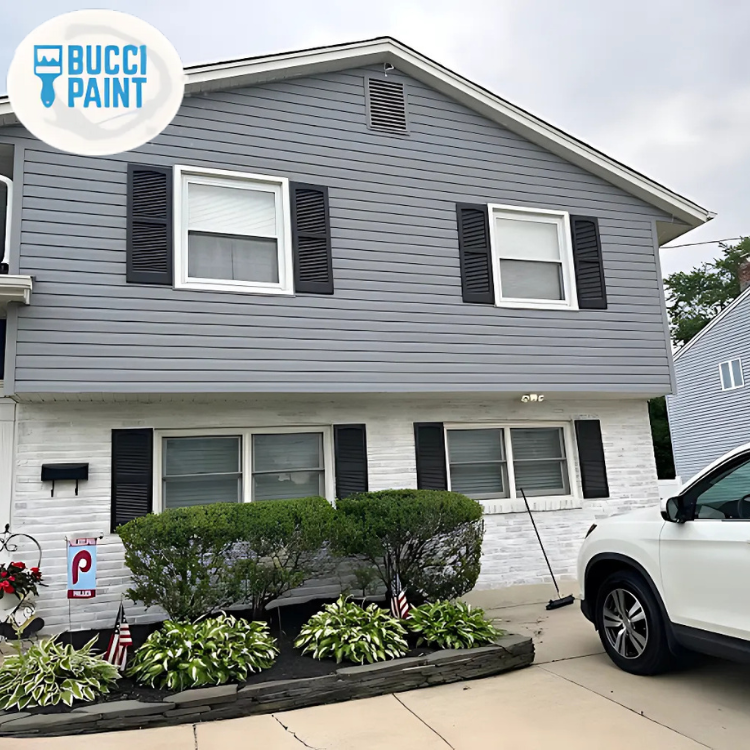
Exterior Painting: Choose the Right Sheen for Sunlight
On a bright July afternoon in Evesham, two homes can sit side by side, painted the same color, yet look completely different. One looks rich, smooth, and well-kept. The other shows every patch, nail pop, and repair. The difference often isn’t the paint color—it’s the sheen.
In South Jersey, where we see everything from blinding summer sun to icy winter glare, the way exterior paint reflects light affects not just curb appeal, but how long your paint job actually lasts. Studies from major paint manufacturers show that UV exposure is one of the top causes of fading and premature paint failure on exteriors. Choosing the wrong sheen for your siding, trim, or doors can speed that process up.
This guide breaks down how sunlight interacts with different sheens, where each finish works best, and how to make smart choices for your specific home or building in Evesham and the surrounding New Jersey communities. You’ll see real examples, learn practical rules of thumb, and walk away knowing exactly which sheen to choose for a fresh, durable exterior.
Key Insight: The right sheen for your exterior isn’t just about looks; it’s about how your surfaces handle South Jersey sun, moisture, and wear over time.
How Sunlight, Sheen, and Surface Imperfections Work Together
Sunlight doesn’t just light up your house—it exposes every flaw. The shinier the paint, the more it reflects light like a mirror. That’s great on smooth, well-prepared surfaces, but not so great on older siding or patched stucco.
Flat and matte sheens absorb more light and hide imperfections.
Satin and eggshell reflect a bit more, giving a soft glow.
Semi-gloss and gloss reflect a lot of light, making surfaces pop—but also making flaws stand out.
In Evesham, we see a lot of older vinyl siding, weathered wood, and masonry that’s been through decades of freeze-thaw cycles. High-sheen paint on those surfaces can highlight:
- Lap marks or roller lines
- Old patchwork and caulking
- Uneven texture on stucco or masonry
- Slight warping in wood siding
“Sheen is like lighting in a dressing room—it either flatters or exposes everything.” — A seasoned exterior estimator
Local example:
A homeowner off Kresson Road wanted a crisp, bright white for their 25-year-old wood siding. They initially asked for semi-gloss everywhere to “really make it shine.” After a closer look, we recommended a high-quality flat for the siding and semi-gloss just for the trim and doors. Once finished, the siding looked smooth and uniform, and the trim had that clean, defined shine they wanted. Under strong afternoon sun, the home looked polished instead of patchy.
This balance between light reflection and surface condition is the foundation for every sheen choice on an exterior.
Sheen Options Explained: From Flat to Gloss in Real-World Terms
Knowing the names of sheens is one thing; understanding how they look on a house at 2 p.m. in July is another. Here’s how the major sheens behave in sunlight and where they typically work best around Evesham and South Jersey.
Flat / Matte
- Look: Non-reflective, velvety finish
- Best for: Older siding, stucco, masonry, large wall areas
- Pros: Hides imperfections, forgiving on patchwork, soft appearance
- Cons: Less washable, can chalk faster on low-quality products
We often recommend flat for older brick or stucco homes around Marlton Lakes and older neighborhoods where texture and repairs are common. A high-quality flat exterior paint still holds up well when properly applied over sound surfaces.
Satin / Low-Sheen / Eggshell
- Look: Soft, subtle sheen—most popular for exteriors
- Best for: Newer siding, fiber cement, well-prepped wood
- Pros: More washable and durable than flat, still hides minor flaws
- Cons: Can show roller marks or touch-ups if not applied correctly
Many newer homes in developments around Evesham use a satin or low-sheen finish on siding. It offers a nice balance between appearance and cleanability.
Semi-Gloss
- Look: Noticeable shine, catches the eye in sunlight
- Best for: Trim, doors, railings, gutters, metal elements
- Pros: Very washable, resists moisture, looks crisp
- Cons: Highlights any surface defects, needs good prep
Semi-gloss is the workhorse sheen for exterior trim and doors on both residential and light commercial projects. Paired with quality Trim and Door Installation, it can really frame a home.
Gloss / High-Gloss
- Look: Very shiny, almost reflective
- Best for: Specialty accents, high-impact doors, railings
- Pros: Extremely durable and striking when done right
- Cons: Unforgiving on imperfections, not for large areas
“Use high-gloss like jewelry on a home—sparingly, but with intention.” — Exterior Design Consultant
Understanding how each sheen behaves sets you up for smarter decisions on every surface of your home.
Matching Sheen to Surface: Siding, Trim, Masonry, and Decks
Different exterior materials interact with sunlight in different ways. The same sheen that looks perfect on smooth fiber cement can look harsh on rough stucco. Matching the finish to both the material and the amount of sun it receives is where professional planning pays off.
Siding (Vinyl, Wood, Fiber Cement)
- Older or imperfect siding: Flat or low-sheen is usually best. It softens waves in vinyl and hides small repairs.
- Newer, smooth siding: Satin or low-sheen creates a clean, modern look with better washability.
Case study:
In an Evesham neighborhood near Black Run Preserve, a homeowner with slightly warped vinyl siding chose a satin finish. On sunny days, the waviness became very noticeable. A few years later, during a full Exterior Painting refresh, we shifted to a high-quality flat acrylic. The house immediately looked straighter and more uniform, even though we didn’t replace any siding.
Trim, Fascia, and Doors
These details benefit from contrast in sheen as well as color.
- Trim and fascia: Semi-gloss is common for its crisp look and cleanability.
- Doors: Semi-gloss or gloss for high impact and durability around hardware and hand contact.
Pairing properly installed trim with a durable sheen can transform tired exteriors. When needed, we coordinate minor carpentry or Carpentry Services to replace rotted boards before painting, ensuring the sheen enhances, not exposes, the surface.
Masonry, Concrete, and Stucco
These porous surfaces demand products and sheens designed for them.
- Rough stucco or block: Flat or low-sheen to minimize shadowing and unevenness.
- Smooth concrete features: Low-sheen or satin for subtle definition.
For specialized surfaces, we often use dedicated masonry, concrete, and stucco coatings that are formulated to handle moisture and UV exposure without peeling.
Decks and Railings
Decks are a bit different—they’re walked on, exposed to standing water, and blasted by sun.
- Horizontal deck boards: Stains (transparent to solid) are more common than paint; when painted, a low-sheen or specially formulated floor enamel works best.
- Railings and spindles: Semi-gloss for wipeability and visual definition.
Homeowners who’ve struggled with peeling deck paint often benefit from a professional evaluation and new Deck Painting or Deck Staining system that respects how the wood moves and weathers in our climate.
How Sun Exposure and Orientation Affect Sheen Choices
Not every side of your home gets the same sun. In Evesham and across South Jersey, orientation plays a big role in how paint weathers and appears throughout the day.
North-Facing vs. South-Facing
- South- and west-facing elevations get the strongest sun and most UV exposure.
- North-facing sides tend to stay cooler, shadier, and can hold moisture longer.
On the sunnier sides, higher sheens will:
- Reflect more light, sometimes creating glare
- Highlight texture and defects more strongly
- Potentially show fading more noticeably over time
On shadier sides, a bit more sheen can actually brighten the appearance without harsh reflections.
Local example:
A commercial property near Route 73 had deep overhangs on the north side and full sun on the south. We used a satin finish on the north façade to keep it bright and easy to clean, and a flatter sheen on the south elevation to reduce glare and minimize the look of expansion joints and patching. The building now looks balanced from every angle.
Coastal Influence and Weather Patterns
While Evesham isn’t directly on the coast, we still feel the effects of coastal weather—humidity, storms, and rapid temperature changes. These conditions, combined with sunlight, impact sheen performance:
- High humidity can make glossy sheens look streaky if applied in poor conditions.
- Intense summer heat on dark colors can cause flashing or uneven sheen without proper technique.
“Sunlight doesn’t work alone—heat, humidity, and wind all join in to test your paint film.” — Field Supervisor, Exterior Division
Practical Rules of Thumb
- Use flatter sheens on the most sun-exposed, imperfect surfaces.
- Reserve higher sheens for details, doors, and surfaces you want to clean frequently.
- Consider slightly different sheens for different elevations in complex projects (especially commercial).
Traditional vs. Modern Sheen Strategies in New Jersey
Approaches to exterior sheen have evolved. Older methods often favored a one-sheen-fits-all mindset, but modern best practices tailor sheen to surface, exposure, and maintenance needs.
Sheen Strategy Comparison
| Approach | Traditional Method | Modern, Best-Practice Method |
|---|---|---|
| Whole-house sheen | One sheen for all surfaces | Different sheens for siding, trim, doors, and special surfaces |
| Siding on older homes | Semi-gloss for “washability” | Flat or low-sheen to hide flaws, quality product for durability |
| Trim & doors | Same sheen as siding | Semi-gloss or gloss for contrast and cleanability |
| Masonry & stucco | Generic exterior paint, random sheen | Purpose-built masonry coatings with appropriate sheen |
| Decks | High-gloss paint for “protection” | Deck-specific stains or low-sheen floor enamels |
| Residential vs commercial | One strategy for both | Tailored to traffic, cleaning needs, and brand image |
Modern manufacturers and industry standards emphasize system-based thinking: primer, paint, and sheen all selected together based on surface and exposure. In New Jersey’s mix of historic homes, newer developments, and commercial buildings, this approach reduces callbacks and extends repaint cycles.
Local cost/benefit note:
Spending a bit more on the right sheen and product system can extend the life of an exterior paint job by several years. In the Evesham area, that can mean stretching a repaint cycle from 7–8 years to 10–12 years on a well-maintained home—significant savings over time.
“Durability isn’t just about the brand of paint; it’s about using the right sheen in the right place.” — Project Manager, Bucci Paint
Sheen Choices for Homes vs. Businesses in Evesham
Residential and commercial properties often have different goals. Homeowners may prioritize warmth and curb appeal, while businesses care more about brand presentation, maintenance, and durability.
Residential Properties
For homes, we typically see:
- Siding: Flat or low-sheen for a softer, more forgiving look
- Trim and doors: Semi-gloss for clean lines and easy cleaning
- Decks and porches: Stains or low-sheen coatings that handle foot traffic
Homeowners who are also refreshing interiors often coordinate their exterior project with Residential Interior Painting to create a cohesive style inside and out.
Commercial Properties
For businesses—offices, retail, medical, and multi-family buildings—the priorities shift:
- Higher sheens on high-traffic areas for washability
- Consistent brand colors that hold up under strong sun
- Easy-to-clean finishes around entrances, loading areas, and signage
A semi-gloss or satin finish on commercial stucco or fiber cement can make it easier to wash off dirt, smudges, and graffiti, especially along busy corridors near Route 70 and 73. Our Commercial Painters team often designs sheen schedules that balance appearance and maintenance costs for property managers.
Cost and Maintenance Comparison (Typical Evesham Scenario)
| Property Type | Typical Sheen Mix | Maintenance Frequency (Spot Cleaning) | Repaint Cycle (Average) |
|---|---|---|---|
| Single-family home | Flat siding, semi-gloss trim/doors | Low to moderate | 8–12 years |
| Townhome community | Low-sheen siding, semi-gloss trim | Moderate | 7–10 years |
| Retail/office space | Satin/semigloss on key areas | High | 5–8 years |
| Multi-family complex | Mix of low-sheen and semi-gloss | Moderate to high | 7–10 years |
What This Means for Businesses in Evesham, NJ
Evesham’s mix of residential neighborhoods, small businesses, and commercial centers means your building doesn’t just sit in the background—it competes visually with everything around it. The way your exterior paint interacts with sunlight can either elevate your presence or quietly undermine it.
For retailers along major routes, a well-chosen sheen on your façade and signage areas can make colors appear more consistent and readable throughout the day. Glare on the wrong surface can actually make signage harder to read from the road. On the other hand, the right satin or semi-gloss finish keeps things sharp and allows for frequent washing without wearing the film down too quickly.
Office and medical buildings near busy corridors benefit from durable, easy-to-clean finishes. High-touch areas—entry doors, railings, trim around entrances—see fingerprints, scuff marks, and weather-related grime. Using a higher sheen strategically in those zones reduces maintenance time and keeps your building looking professional between full repaints.
For property managers handling multi-family units or mixed-use buildings, a thoughtful sheen strategy can:
- Reduce visible wear on high-traffic entries and common areas
- Help hide minor substrate irregularities on large wall areas
- Make touch-ups less noticeable when done with the right sheen match
In a competitive local market, details like this can influence tenant satisfaction and perceived property value.
Bucci Paint regularly partners with local owners to align exterior sheen choices with branding, maintenance budgets, and long-term plans. Whether you’re refreshing a small storefront or planning a phased repaint across multiple buildings, getting sheen right is one of those “small” technical decisions that has a big visual payoff.
Frequently Asked Questions
Q: My siding gets full sun most of the day. Which sheen will hold up best without looking worn?
A: On heavily sun-exposed siding in South Jersey, a high-quality flat or low-sheen acrylic is usually the best balance. It helps minimize the look of expansion, waviness, and minor imperfections that the sun would otherwise highlight. The key is to choose a professional-grade exterior product and proper surface prep—not just a glossier sheen. We often pair flatter sheens on siding with semi-gloss on trim and doors so the home still has visual “pop” where it counts. If you’re also planning Exterior Painting for trim or doors, we can coordinate a full sheen schedule that respects the sun exposure on each side of your home.
Q: Will a higher sheen make my older stucco or masonry look better?
A: Usually, no. On older stucco or masonry, higher sheens tend to accentuate every patch, crack, and trowel mark, especially under strong sunlight. A flat or low-sheen coating designed specifically for masonry is often a better option. At Bucci Paint, we use dedicated masonry, concrete, and stucco coatings that allow the surface to breathe while still providing color and protection. If your stucco has significant cracking or repair needs, we may recommend addressing those first, sometimes as part of a broader exterior or general remodeling plan, before choosing the final sheen.
Q: I want my front door to really stand out. Is high-gloss a good idea in our climate?
A: A glossy or semi-gloss front door can look fantastic and hold up well in Evesham—if the door is properly prepped and the right product is used. High-gloss is unforgiving on imperfections, so we often sand, fill, and prime thoroughly before applying it. For doors in full, harsh sun, a top-tier exterior enamel in semi-gloss is sometimes a better choice than ultra-high-gloss, balancing impact with durability. We also coordinate with our Trim and Door Installation services when a door or frame needs repair or replacement before painting.
Q: How does sheen affect cleaning and maintenance for my business exterior?
A: For commercial buildings, sheen can significantly influence maintenance costs. Higher sheens like satin or semi-gloss resist staining better and are easier to wash, which is useful around entrances, loading docks, and high-traffic areas. However, we avoid very glossy finishes on large wall surfaces where glare could be an issue. Our Commercial Painters typically design a mix: more durable sheens where hands, carts, and equipment make contact, and softer sheens on broad walls to minimize visual flaws. This approach keeps your building looking professional while controlling long-term cleaning and repainting expenses.
Q: Can I use the same sheen inside and outside for consistency?
A: Interior and exterior environments are very different, so it’s better to choose sheens based on performance rather than matching them exactly. Interior walls often use matte or eggshell, while exteriors might use flat or low-sheen for siding and semi-gloss for trim. Exterior products also have different resins and UV protection. If you’re planning both Interior painting and exterior work, we can coordinate color and overall style so your home feels cohesive, even if the exact sheens differ. The goal is a unified look that respects the demands of each environment.
Q: My deck is peeling and very shiny. Should I repaint it with a lower sheen?
A: Peeling on a shiny deck often means the previous coating wasn’t ideal for a horizontal, high-traffic, high-sun surface. Before choosing sheen, we assess the existing coating, moisture content, and wood condition. In many Evesham homes, we recommend stripping or sanding failing coatings and switching to a deck-specific system—often a solid or semi-transparent stain rather than a glossy paint. When paint is appropriate, we use low-sheen products designed for floors, not standard wall paints. Our Deck Repainting, Deck Painting, and Deck Staining services focus on long-term performance, not just short-term shine.
Q: Do I need to fix damaged trim or siding before choosing a sheen?
A: Yes. Sheen can only do so much to hide or highlight what’s already there. If trim is rotted, siding is loose, or there are gaps and cracks, those issues should be addressed first. At Bucci Paint, we frequently pair exterior painting with light carpentry and Carpentry Services to replace damaged boards, repair trim, or even coordinate with drywall install and repair inside if water damage has occurred. Once the surfaces are sound, we select sheens that enhance, rather than fight against, the quality of the repair work.
Ready to Get Started?
Sunlight isn’t going to let up any time soon, and every season in Evesham puts your exterior through another round of tests—UV rays, rain, temperature swings, and winter salt spray. The right sheen choices today can buy you years of better performance and a cleaner, more polished look.
This is an ideal time to plan your exterior work. Spring and early summer projects are ready to handle the strongest sun; late-summer and fall projects go into winter fully protected. Our schedule fills up quickly during these peak seasons, especially for larger homes and commercial properties that require more planning.
If you’re considering a full exterior repaint, a targeted refresh of trim and doors, or a combination of exterior work with Residential Interior Painting, we can walk you through a tailored sheen and color plan. You’ll know exactly what’s going on each surface, why, and how it will look at different times of day.
Bucci Paint has deep experience with South Jersey’s climate and architecture. We’ll help you make smart, long-lasting choices so your home or business looks its best in every kind of light.
About Bucci Paint
Bucci Paint is a locally focused painting and remodeling company serving Evesham, NJ and surrounding South Jersey communities. Our team specializes in detailed Exterior Painting, Interior painting, light carpentry, and related services that keep homes and businesses looking sharp year-round. With years of hands-on experience in this climate and a commitment to careful prep and craftsmanship, we help property owners get more life and value from every project. Learn more about our services and approach at Bucci Paint’s website.