
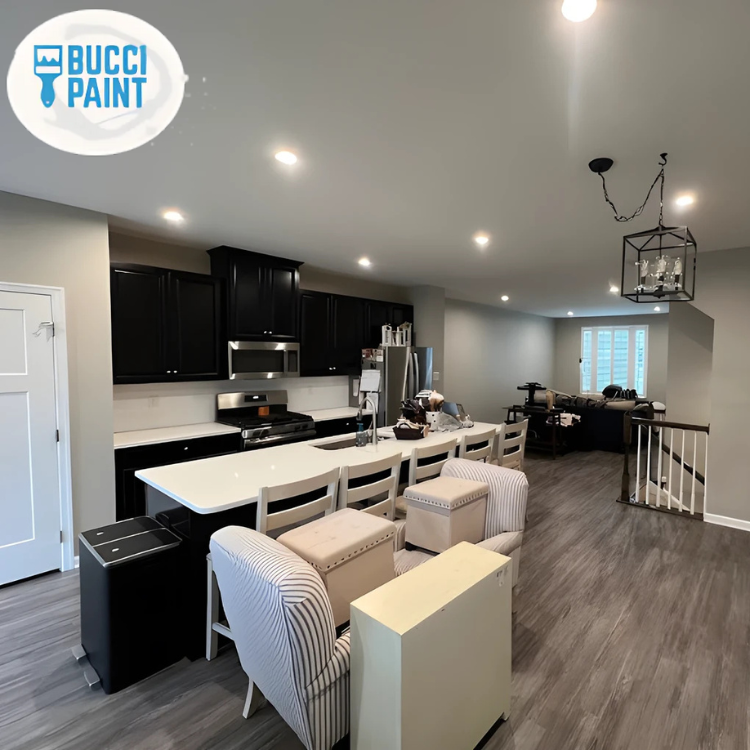
Interior Painting With Low-VOC Options for Comfort
On a humid summer day in Evesham, NJ, most homeowners want to close the windows, crank up the AC, and enjoy the cool air. But if you’ve ever had fresh paint applied right before a heat wave, you know that “new paint smell” can turn your home into a space you’d rather escape than relax in. That odor is more than just annoying—it’s a sign of volatile organic compounds (VOCs) in the air.
According to the EPA, indoor air can be two to five times more polluted than outdoor air, largely due to products like paint and finishes. For families in South Jersey—especially those with kids, seniors, or allergy sufferers—this matters every single day.
This article breaks down how low- and zero-VOC interior paints work, why they’re a smart choice for comfort and health in Evesham homes, and how a professional, detail-focused team like Bucci Paint approaches them. You’ll learn what to look for on labels, how low-VOC options perform in real-world conditions, and how to plan your next project for maximum comfort and minimal disruption.
Key Insight: Low-VOC interior painting gives you a beautiful, durable finish while keeping your home more comfortable, healthier, and usable during and after the project.
Why VOCs Matter More in Evesham Homes Than You Think
VOCs are carbon-based chemicals that evaporate easily at room temperature. Traditional interior paints, primers, stains, and finishes can release VOCs for days or even weeks after application, contributing to:
- Headaches, dizziness, and fatigue
- Irritated eyes, nose, and throat
- Worsened asthma and allergy symptoms
In Evesham and across South Jersey, our climate amplifies this issue. We run our HVAC systems heavily in summer and winter, keeping windows closed and air recirculating. That means whatever gets into your indoor air tends to stay there.
“People underestimate how much time they spend breathing indoor air. Paint is one of the most controllable sources of indoor emissions.” — Indoor Air Quality Association
A real local scenario
A family in Marlton contacted Bucci Paint because their son’s asthma flared up after a DIY painting project in his bedroom. The paint they used was high-VOC, and the room stayed stuffy and odorous for over a week. When they renovated their downstairs, they asked us to use low-VOC products only.
We repainted their living room, kitchen, and hallway using quality low-VOC paints and matched the existing colors. The difference was immediate: less odor, quicker comfort, and no noticeable impact on the son’s breathing.
As more homeowners prioritize health and comfort, low-VOC is becoming the standard—not the exception—for thoughtful interior painting in Evesham.
What “Low-VOC” Really Means (And How to Read the Label)
Not all “low-VOC” paints are created equal. The term itself is regulated, but marketing can still be confusing. Understanding the basics helps you make better choices for your home.
VOC numbers to know
In the U.S., low-VOC paints typically contain:
- 50 grams per liter (g/L) or less for flat finishes
- 150 g/L or less for non-flat finishes
Zero-VOC paints usually contain 5 g/L or less, but “zero” doesn’t always mean absolutely none—it means “negligible” under current standards.
What to check on the can
When we help Evesham homeowners choose paint, we look at:
- VOC content listed in g/L on the technical data sheet
- Third-party certifications (e.g., GreenGuard Gold, MPI, or Green Seal)
- Whether tints and colorants are also low- or zero-VOC
A common surprise: some paints are labeled low-VOC in the base form, but the colorants added at the store can significantly increase VOC levels—especially with dark, rich colors.
“Always ask whether the tint system is low-VOC. Colorants can undo the benefits of a low-VOC base.” — Benjamin Moore Technical Bulletin
Traditional vs. Low-VOC Interior Paints
| Feature | Traditional Interior Paint | Modern Low-/Zero-VOC Paint |
|---|---|---|
| VOC Level | 150–250+ g/L | 0–50 g/L |
| Odor During Application | Strong | Mild to very low |
| Time Before Room Feels “Usable” | 2–7 days | Same day to 48 hours |
| Impact on Sensitive Occupants | Higher risk of irritation | Significantly reduced risk |
| Typical Cost per Gallon (NJ) | $$ | $$–$$$ (slightly higher) |
| Durability (Modern Products) | Good | Equal or better |
In real Evesham projects, we’ve found that the slightly higher upfront cost of quality low-VOC paint is offset by faster re-occupancy, fewer complaints about odor, and better comfort—especially in bedrooms and main living areas.
Comfort, Odor, and Everyday Living: How Low-VOC Changes the Experience
For most homeowners, comfort is the real test. How does your home feel while painting is happening, and how quickly can life get back to normal?
Living through a project, not around it
A Cherry Hill homeowner recently called us to repaint their entire first floor—kitchen, dining room, living room, and hallway. They work from home and have two small children, so leaving the house for several days wasn’t an option.
We recommended a premium low-VOC line for all walls and trim. The benefits they noticed:
- Odor was present but mild, more like a faint “clean” smell than a harsh chemical odor
- Kids could safely use adjacent spaces within hours
- HVAC didn’t spread an overpowering paint smell through the whole house
They kept their normal routine, working upstairs while we painted downstairs, then swapping spaces as areas dried.
Where low-VOC matters most
In Evesham homes, we strongly recommend low- or zero-VOC options for:
- Bedrooms (especially children’s rooms and nurseries)
- Home offices where you spend long hours
- Living rooms and family rooms
- Basements with limited ventilation
For some specialty applications—like certain primers or stain-blocking products—ultra-low VOC options may be more limited. In those cases, we often:
- Use targeted high-performance primers only where needed
- Plan work when the home can be ventilated well
- Seal and overcoat with low-VOC topcoats to minimize long-term emissions
Comfort isn’t just about aesthetics; it’s about how your home smells, feels, and supports your daily life immediately after the painters pack up.
Durability and Performance: Do Low-VOC Paints Really Hold Up?
A common concern we hear from Evesham homeowners is, “Will low-VOC paint last as long?” A decade ago, the answer might have been “it depends.” Today, the chemistry has caught up—and often surpassed—traditional options.
Modern formulations, better results
Most major manufacturers have reformulated their top-tier products to be low-VOC without sacrificing:
- Washability and scrub resistance
- Stain resistance (critical for kitchens, baths, and entryways)
- Color retention and fade resistance
- Adhesion to various substrates
In our experience across South Jersey, a well-applied low-VOC coating holds up just as well—if not better—than older high-VOC products, especially when paired with proper surface preparation and high-quality primers.
“Performance gaps between traditional and low-VOC coatings have essentially closed for most residential applications.” — PDCA Industry Report
A real-world example: busy family kitchen
An Evesham family with three kids and two dogs hired us to refresh their high-traffic kitchen and mudroom. They were skeptical about low-VOC products because they’d heard they “don’t last” or “don’t clean well.”
We used a premium low-VOC eggshell on walls and a semi-gloss on trim and doors. Six months later, we checked in:
- Scuffs and fingerprints wiped off easily with mild soap and water
- No peeling, bubbling, or premature wear
- Color looked as fresh as day one
They later brought us back for Exterior painting and asked specifically for “the same type of paint you used inside—just for outside.”
Cost vs. value in Evesham
While low-VOC paints can cost slightly more per gallon, the overall project cost difference is usually modest—often 5–10%—because labor is the dominant cost driver. For most homeowners, the added comfort and health benefits easily justify the small premium.
Planning a Low-VOC Interior Project: Strategy, Scheduling, and Prep
Choosing the right paint is only half the equation. To maximize comfort and results, you also need a smart project plan tailored to your household’s routine.
Step 1: Identify priority spaces
We start every Residential Interior Painting project by asking:
- Who uses each room, and when?
- Are there sensitive occupants (kids, elderly, allergies, asthma)?
- Do you need certain rooms available at specific times (home office, nursery, etc.)?
From there, we create a sequence that keeps your most critical spaces functional whenever possible.
Step 2: Surface prep matters
Low-VOC paint won’t hide poor prep. In fact, because these products are often higher-quality, they reveal surface flaws more clearly. That’s why we:
- Repair cracks, nail pops, and holes
- Sand and smooth rough patches
- Address any moisture issues before painting
- Coordinate with our drywall install and repair team when needed
Step 3: Ventilation and timing
Even with low-VOC products, some ventilation helps:
- We often recommend painting during milder seasons in Evesham (spring/fall) when windows can be opened comfortably.
- For winter or peak-summer projects, we coordinate with your HVAC use to avoid pulling too much humid or cold air inside.
- We use fans and negative air strategies, when appropriate, to move fresh air through the space without disturbing drying paint.
By combining low-VOC products with smart scheduling and prep, you get a project that looks great and feels comfortable from day one.
Integrating Low-VOC Choices Into Larger Home Projects
Many South Jersey homeowners tackle multiple upgrades at once: painting, carpentry, remodeling, even exterior work. Low-VOC thinking can—and should—extend across all of these.
Coordinating with remodeling and carpentry
If you’re planning kitchen or bath updates, flooring changes, or new trim, consider a holistic approach:
- Use low-VOC adhesives and caulks where possible
- Choose low-emission finishes for new trim and door installation
- If you’re adding built-ins or storage, ask about low-VOC clear coats or paints, similar to what’s used in general remodeling and custom cabinetry work
A homeowner in Evesham recently hired us to repaint their living room, install new crown molding, and refresh their stairway. By coordinating the carpentry and painting under one roof, we:
- Minimized dust and disruption
- Used compatible low-VOC caulks and paints
- Completed the project in fewer days than if multiple contractors were involved
“Coordinated trades and compatible materials are the backbone of a healthy, low-emission remodel.” — National Association of the Remodeling Industry
Beyond interiors: decks and exteriors
While this article focuses on indoor comfort, many of the same principles apply outside. When we’re doing Exterior painting, Deck Staining, or Deck Painting, we still consider:
- How fumes might drift into open windows or neighboring properties
- The timing of work so families can enjoy outdoor spaces sooner
- Product choices that balance performance with lower emissions
Evesham’s tight-knit neighborhoods and active outdoor lifestyle make it especially important to respect both indoor and outdoor air quality.
What This Means for Businesses in Evesham, NJ
While homeowners are increasingly asking for low-VOC options, businesses in Evesham, Marlton, and surrounding communities stand to gain just as much—if not more—from healthier paint choices.
Employee comfort and productivity
Offices, retail spaces, medical practices, and schools can’t afford prolonged downtime or environments that feel harsh or chemical-laden. When we handle commercial painting projects, low-VOC products help:
- Reduce complaints about headaches and odors
- Allow work to continue in adjacent areas while painting is underway
- Support wellness initiatives and indoor air quality goals
An Evesham professional office complex we repainted over several weekends specifically requested low-VOC products after a previous contractor’s work left strong fumes lingering for days. With modern low-VOC coatings, tenants were able to return Monday morning with only a faint, temporary new-paint scent.
Brand and customer perception
For customer-facing businesses—boutiques, restaurants, salons, fitness studios—how your space smells and feels is part of your brand. Low-VOC interior finishes signal:
- Care for customer comfort and health
- Attention to detail and modern standards
- A commitment to a cleaner, more pleasant environment
Cost and scheduling advantages
Low-VOC products can shorten the “recovery period” after a repaint. For Evesham businesses, that can mean:
- Painting overnight or on a Sunday and reopening comfortably the next business day
- Avoiding costly shutdowns or reduced hours
- Maintaining a professional appearance without sacrificing indoor air quality
When combined with well-planned masonry, concrete, and stucco coatings outside, and thoughtful choices inside, your property can project a unified, well-maintained, and healthy image.
Frequently Asked Questions
Q: How long does low-VOC paint smell last compared to traditional paint in a typical Evesham home?
A: With traditional high-VOC products, strong odor can linger for several days, especially in tightly sealed homes running air conditioning or heat. With quality low-VOC or zero-VOC paints, most homeowners notice a much milder scent that dissipates within 24–48 hours, sometimes even sooner in well-ventilated rooms. We recommend opening windows when weather allows and running bathroom or kitchen exhaust fans to help move fresh air through the space. In many Interior painting projects we’ve completed in Evesham and nearby towns, families comfortably used freshly painted rooms that same evening.
Q: Is low-VOC paint really necessary if no one in my home has allergies or asthma?
A: Even if no one has known sensitivities, reducing VOC exposure is still a smart long-term choice. You spend a large portion of your life indoors, and paint covers a significant amount of surface area in your home. Low-VOC products support better everyday comfort—less harsh odor, fewer headaches, and a generally “cleaner” feel in the space. For many Evesham homeowners, it’s also a future-proofing decision; if your family grows, aging parents move in, or you sell your home, low-VOC updates are a subtle but meaningful upgrade. Given that modern low-VOC products perform just as well as traditional options, there’s little downside.
Q: Are there situations where you still recommend higher-VOC primers or specialty coatings?
A: Occasionally, yes. Certain heavy-duty stain-blocking primers, rust converters, or specialty coatings may still rely on higher solvent content to perform properly, especially on challenging substrates. When that’s the case, we use them strategically and sparingly—only where absolutely needed—and then topcoat with low-VOC paints to minimize long-term emissions. For example, in some older Evesham homes with severe water stains or smoke damage, a robust primer is essential to ensure a lasting result. We discuss these situations with you upfront and plan ventilation and scheduling carefully so disruption and exposure are minimal.
Q: Does low-VOC paint cost significantly more in South Jersey, and is it worth the price difference?
A: The price difference per gallon is usually modest—often a few dollars more for a premium low-VOC line versus a mid-grade traditional product. Because labor is the largest portion of any Residential Interior Painting project, your total project cost may only increase by 5–10%. For most Evesham homeowners, the benefits—reduced odor, better comfort, and a healthier indoor environment—more than justify that small premium. In many cases, we can also recommend cost-effective combinations, such as using ultra-premium low-VOC paints in bedrooms and main living areas, and slightly more economical low-VOC options in secondary spaces.
Q: Can low-VOC paints be used on trim, doors, and cabinets, or just walls?
A: Absolutely. Modern low-VOC technology covers the full range of finishes, including semi-gloss and satin options ideal for trim, doors, and even some cabinetry applications. When we handle trim and door installation or refresh existing woodwork, we often specify durable, low-VOC enamels that resist scuffs and are easy to clean. For built-ins or custom cabinetry-style projects, we can also recommend specialized low-VOC products designed to cure hard and withstand daily use. The key is choosing the right product for each surface, not just defaulting to one paint for everything.
Q: How should I prepare my home before a low-VOC interior painting project starts?
A: Preparation for a low-VOC project is similar to any professional painting job, but a few extra steps can enhance comfort. We recommend: clearing small items and valuables from rooms to be painted; removing wall decor; planning temporary setups for home offices or kids’ study areas if those rooms are on the schedule; and checking your HVAC filters, especially if we’ll be doing any sanding or drywall repair. Let us know about any particularly sensitive family members so we can sequence rooms accordingly. We’ll handle furniture protection, surface prep, and cleanup, but your advance planning helps everything run smoothly.
Q: Can low-VOC products be used for exterior and deck projects as well?
A: Yes, there are many lower-VOC options for Exterior painting, Deck Repainting, and Deck Painting or staining. While exterior work naturally has better ventilation, fumes can still drift into open windows or neighboring properties. Using modern, lower-VOC exterior coatings helps reduce strong solvent odors and makes it easier for you to enjoy your yard sooner after work is complete. In Evesham’s close-knit neighborhoods—especially developments where homes are relatively close together—this is a considerate choice for both your family and your neighbors.
Ready to Get Started?
Evesham’s climate and modern, well-sealed homes make indoor air quality more important than ever. If you’re planning a refresh this season, low-VOC interior painting is one of the simplest ways to upgrade both the look and feel of your space. Schedules fill quickly during prime painting months in South Jersey, especially for projects that combine interior work with Exterior painting or deck work, so it pays to plan ahead.
Bucci Paint can walk you through product options, help you prioritize rooms, and build a schedule that keeps your home comfortable and functional while we work. Whether you’re repainting a single bedroom or coordinating a whole-home update with carpentry and drywall repairs, we’ll recommend low-VOC solutions that fit your needs, budget, and timeline.
Reach out today to discuss your project, get a detailed estimate, and reserve your preferred dates. Your home should feel as good as it looks—starting the moment the last brushstroke dries.
About Bucci Paint
Bucci Paint is a locally owned painting and remodeling company based in Evesham, NJ, serving homeowners and businesses across South Jersey. With years of experience in Interior painting, exterior coatings, carpentry, and light remodeling, we focus on craftsmanship, clear communication, and solutions that support healthier, more comfortable spaces. From single-room refreshes to full-property updates, our team brings professional standards and a neighborly approach to every project. Learn more about our services and history at Bucci Paint’s website.