
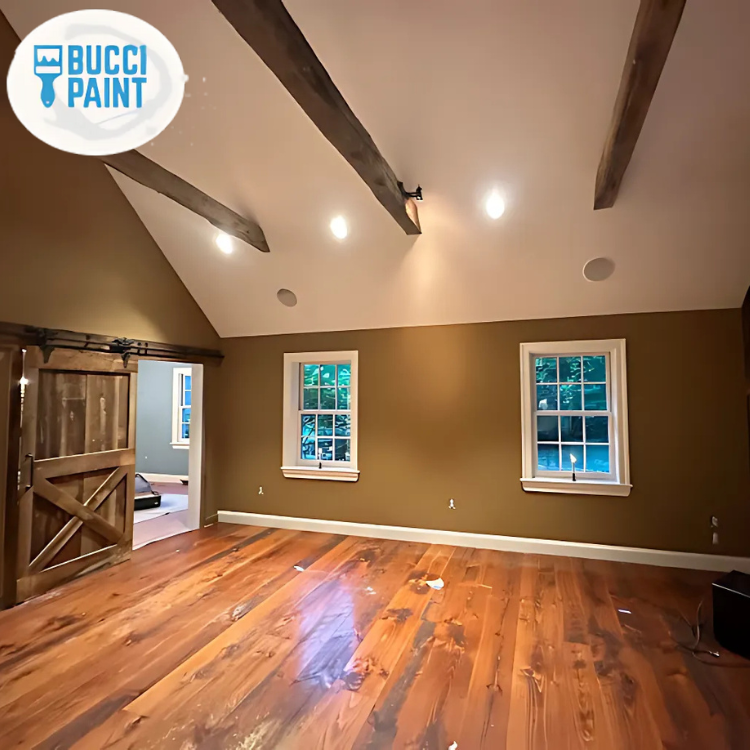
Interior Painting: Harmonize Walls, Trim, and Ceilings
A freshly painted room can feel like an entirely new space—or a slightly “off” one—depending on how well the walls, trim, and ceiling work together. Homeowners in Evesham and across South Jersey are investing more in their interiors than ever, but many still struggle with one simple question: how do you coordinate colors and finishes so every surface feels intentional?
Nationally, interior upgrades like painting deliver some of the best returns, with color updates alone adding perceived value and appeal for 60%+ of buyers. Locally, South Jersey homeowners are also dealing with unique factors: lower natural light in many older homes, mixed-open floor plans in newer construction, and the constant push to balance style with practicality for busy households.
This guide walks you through how to harmonize walls, trim, and ceilings—step by step—so your spaces feel cohesive, calm, and beautifully finished. You’ll see how professionals approach color, sheen, and prep, what works best in Evesham homes, and how a thoughtful plan can transform everything from living rooms to commercial spaces.
Key Insight: The most beautiful rooms aren’t about one “perfect” color—they’re about the relationship between walls, trim, and ceilings, and how each element supports the others.
Seeing the Room as a Whole: Why Coordination Matters
Most paint projects start with one question: “What color should I put on the walls?” The better question is, “What story should this room tell?” Walls, trim, and ceilings are the three main characters, and they have to work together.
In many Evesham homes, we see a mix of eras: 1960s colonials with narrow trim, newer builds with wide craftsman-style casings, and townhomes with builder-grade finishes. Each type of architecture calls for a slightly different approach to color relationships.
For example, a family in Kings Grant called us because their living room felt “busy and choppy.” The walls were a warm beige, the trim a bright, cool white, and the ceiling slightly yellowed with age. Each element looked fine alone, but together they clashed. We:
- Chose a soft, warm neutral for the walls
- Updated the trim to a warmer white in a satin sheen
- Repainted the ceiling a very light warm white in flat
The colors shifted only subtly, yet the entire room suddenly felt calm and cohesive.
“Color harmony isn’t about drama; it’s about balance that you feel before you even notice it.” — Bucci Paint Design Team
Thoughtful coordination is just as important for Interior painting in commercial spaces, where brand colors, lighting, and traffic patterns all play a role. Once you start seeing the room as a whole, individual color choices become much easier.
Walls: Setting the Mood and Managing Light
Walls carry the largest visual load in any room, so they set the tone. In Evesham, where many homes have a mix of natural and artificial light, wall color has to work hard—from bright mornings to dim winter afternoons.
Choosing the right undertone
Two grays can look identical on the swatch but completely different on your wall. That’s because of undertones—warm (yellow/red) vs. cool (blue/green). South Jersey’s tree-lined streets often cast green light into rooms, which can make cool grays feel icy and uninviting.
We recently worked on a general remodeling project near Marlton Lakes. The homeowners wanted a “modern gray” but hated how previous samples looked blue. We:
- Tested 4–5 options on all four walls
- Checked them at morning, midday, and evening
- Landed on a warm greige that looked neutral in every light
They kept their existing white trim, but the new wall color made that trim look crisper and more intentional.
Sheen choices for walls
For most residential interior spaces:
- Matte or eggshell: Best for living rooms, bedrooms, and hallways
- Satin: Good for kitchens, bathrooms, and kids’ rooms where wipeability matters
“Sheen is as important as color. The wrong sheen can highlight every drywall flaw.” — Bucci Paint Project Manager
If your walls are dinged, patched, or show old tape joints, professional drywall install and repair combined with a matte finish can dramatically improve the final look.
Trim: Framing the Room with Precision and Contrast
Trim is the frame around your artwork—and in many Evesham homes, it’s the key to making dated spaces feel current without replacing every surface. Doors, baseboards, window casings, and crown molding can either quietly support your walls or make a strong design statement.
Classic white vs. painted trim
Most homeowners default to white trim, and for good reason: it’s timeless, flexible, and works with nearly any wall color. But “white” is not one color. There are warm whites, cool whites, and true neutrals. Matching the undertone of your trim to your walls is critical.
In a Heritage Village ranch, we updated heavily stained wood trim the owners felt was “dragging the house down.” Rather than ripping it out, we:
- Repaired and sanded the existing trim
- Primed with a stain-blocking primer
- Painted it a warm white in semi-gloss
Paired with a soft greige wall color, the room suddenly felt bigger and brighter—without any major trim and door installation work.
On the other hand, painted trim in a color (like charcoal or deep blue) can look stunning in specific spaces, especially in offices, libraries, or dining rooms. The key is consistency: carry that trim color through connected spaces or clearly define where it starts and stops.
Sheen and durability
For trim, professional standards typically recommend:
- Semi-gloss: Most common; durable and easy to clean
- Satin: Softer look but still wipeable, great for more subtle trim
Trim coordination matters just as much in commercial settings. In an office repaint we handled for a local business along Route 70, updating dated oak trim to a crisp white instantly modernized the space—without touching the flooring or furniture.
Ceilings: The “Fifth Wall” That Quietly Controls the Space
Ceilings are often treated as an afterthought, but they have a huge impact on how a room feels. A well-chosen ceiling color can make a low room feel taller, a large room feel cozier, or a long hallway feel less tunnel-like.
Standard white vs. tinted ceilings
Most ceilings are painted some variation of white, usually in a flat sheen to hide imperfections. That’s still a smart default, especially in Evesham homes where ceiling textures and older drywall can show flaws under higher sheens.
However, small shifts in color make a big difference:
- Slightly warmer white: Softens the space and works well with warm wall colors
- Slightly cooler white: Can balance very warm walls or wood tones
- Tinted to 50% of wall color: Creates a cozy, enveloping feel in bedrooms or dens
In a townhome near Marlton’s Promenade, the homeowners loved their deep blue bedroom walls but felt the room was “caving in.” We repainted the ceiling a lighter, warm white (instead of the dingy builder white) and extended the wall color just slightly onto the ceiling line. The room suddenly felt more tailored and less boxy.
“Ceilings are where small color decisions pay off in a big way—especially in rooms with limited natural light.” — Bucci Paint Lead Painter
When ceilings need extra attention
If you see cracks, stains, or peeling paint overhead, it’s not just a cosmetic issue. Water stains, smoke damage, or failing tape joints require proper prep and sometimes drywall repair before painting. Skipping this step almost guarantees you’ll see the problem again.
How Sheen and Color Work Together: Traditional vs. Modern Approaches
Harmonizing walls, trim, and ceilings isn’t just about color—it’s also about sheen. The way light bounces off each surface can either unify or fragment your space.
Here’s how older “rules” compare to what’s working now in Evesham homes:
| Aspect | Traditional Approach | Modern, South Jersey–Friendly Approach |
|---|---|---|
| Wall Sheen | Eggshell or semi-gloss throughout | Matte/eggshell in living areas, satin in high-use spaces |
| Trim Color | Bright, cool white by default | Warm or neutral white matched to wall undertones |
| Ceiling Color | Basic contractor white | Slightly tuned warm/cool white or 50% of wall color |
| Contrast Level | High contrast walls vs. trim in every room | Varying contrast by room purpose and natural light |
| Prep Work | Spot patching only | Full surface evaluation, sanding, and priming where needed |
| Room-to-Room Coordination | Each room treated separately | Whole-home palette with 4–6 coordinating colors |
We updated a 1980s colonial off Kresson Road where every room had different trim whites and random sheens. By:
- Standardizing trim to one warm white in semi-gloss
- Choosing a cohesive palette for walls across the first floor
- Using a consistent ceiling color
the house felt unified and more upscale, without any structural changes.
For homeowners planning future Exterior painting, thinking about interior and exterior palettes together can also create a seamless experience—from curb appeal to living room.
Color Flow Between Rooms: Creating a Whole-Home Palette
Even the best-painted single room can feel out of place if the rest of the house tells a different color story. That’s where a whole-home palette comes in—especially important in Evesham’s many open and semi-open floor plans.
Building a cohesive palette
A practical palette for a typical South Jersey home might include:
- 1–2 main neutrals for common areas
- 1 deeper accent color for a dining room or office
- 2–3 supporting colors for bedrooms and bathrooms
- 1 trim/door color and 1 ceiling color used consistently
In a Brush Hollow home, the owners were frustrated that every room had been painted a different bold color by the previous owner. The house felt smaller and chaotic. We:
- Identified a warm greige as the main color for hallways and living spaces
- Used a slightly deeper tone of that color in the dining room
- Introduced soft blues and greens in bedrooms and baths
- Kept trim and ceilings consistent throughout
The result was a home that felt designed, not improvised.
“Think of your color palette like a playlist. Each song (room) is different, but they all belong together.” — Bucci Paint Color Consultant
This approach is just as valuable for multi-unit properties or offices, where brand consistency matters. Coordinated commercial painters can help maintain a professional, cohesive look across multiple spaces or locations.
Preparation, Details, and Long-Term Durability
Even the best color plan can fall flat without proper prep and attention to detail. Harmonizing walls, trim, and ceilings isn’t only about how they look on day one—it’s about how they perform over years of daily life.
Why prep matters so much
In Evesham’s climate, seasonal temperature and humidity swings can cause minor settling, nail pops, and hairline cracks. Before any Residential Interior Painting project, we:
- Inspect for cracks, nail pops, and failed tape joints
- Address water stains or previous paint failures
- Sand glossy surfaces so new paint adheres properly
- Caulk gaps at trim and crown molding for clean lines
On a recent job in a Willow Ridge home, the owners thought they needed new trim because of visible gaps and shadow lines. Instead, careful caulking, sanding, and repainting made the existing trim look brand new.
Considering the bigger picture
Many interior projects connect to other improvements:
- Updating trim color before new flooring goes in
- Coordinating kitchen wall colors with flooring installation
- Planning future masonry, concrete, and stucco coatings outside to match interior style
For homeowners with decks or outdoor living spaces, tying interior colors to future Deck Staining or Deck Painting plans can create a smooth visual transition from inside to out.
What This Means for Businesses in Evesham, NJ
For Evesham homeowners and local businesses, harmonizing walls, trim, and ceilings is more than an aesthetic exercise—it’s a practical investment. Our area has a competitive housing market and a strong small-business community. How your property looks on the inside influences everything from resale value to client perception.
In residential settings, buyers increasingly expect move-in-ready homes. Fresh, coordinated paint is one of the most cost-effective ways to achieve that. A thoughtful palette and professional finish can:
- Make older homes feel current without major renovations
- Highlight architectural details instead of hiding them
- Help smaller spaces feel larger and more functional
For local businesses—whether you’re near the Promenade, along Route 73, or tucked into a neighborhood center—interior presentation directly affects customer experience. Coordinated colors, clean trim lines, and well-maintained ceilings tell clients you pay attention to details. That matters in professional offices, retail spaces, and hospitality environments.
Working with a team that understands Evesham’s housing stock, light patterns, and local preferences is a major advantage. It means recommendations are grounded in what actually works here—not just what’s trending nationally. From Exterior Painting that ties into your interior palette to targeted general remodeling that supports your design goals, a coordinated approach delivers the most value.
Frequently Asked Questions
Q: How do I choose a trim color that works with every room in my Evesham home?
A: Start by deciding whether you prefer a warm or cool overall feel. Look at your fixed elements—floors, countertops, and major furniture. If you have warm-toned wood floors or beige carpets, a warm white trim usually looks best. For cooler grays or modern tile, a neutral or slightly cool white can work well. Once you choose a trim color, use it consistently on baseboards, doors, and casings throughout the house. That consistency lets you change wall colors over time without repainting all your trim. Professional Interior painting contractors can also bring sample boards to compare directly against your existing finishes.
Q: Should my ceiling always be pure white, or can I use color?
A: Pure white isn’t a requirement—and often isn’t the best choice. In many South Jersey homes, a slightly warmer or cooler white looks better with your wall colors and natural light. In lower rooms, a very light, warm ceiling color can make the space feel more inviting. In bedrooms or media rooms, tinting the ceiling to 50% of the wall color creates a cozy, enveloping feel. Flat sheen is usually best to hide imperfections. If your ceilings have stains or cracks, address those with proper repair or drywall install and repair before painting so the finish lasts.
Q: How do interior colors relate to my home’s exterior and deck?
A: Ideally, your interior and exterior feel like they belong to the same home—even if the colors aren’t identical. For example, if your exterior siding is a cool gray with white trim, choosing similar undertones inside creates a cohesive experience as you move from room to room and out to the yard. For homes with outdoor living spaces, coordinating indoor wall colors with planned Deck Repainting or Deck Staining helps blur the line between indoors and out. A professional who handles both Exterior painting and interior projects can help you build one unified palette.
Q: Our trim and doors are damaged. Should we replace them or just paint?
A: It depends on the extent and type of damage. Cosmetic issues—minor dents, yellowing, or dated stain—can usually be addressed with sanding, filling, and high-quality paint. More significant problems such as warped casings, rotted wood, or poorly installed doors may call for new trim and door installation. In many Evesham homes, we take a hybrid approach: replace only what’s truly failing and refresh the rest with careful prep and paint. This maximizes your budget while still delivering a crisp, consistent look throughout the home.
Q: We run a small office in Evesham. How is harmonizing walls, trim, and ceilings different for commercial spaces?
A: Commercial environments have different demands: higher foot traffic, brand considerations, and often more complex lighting. Colors need to support your brand, keep staff comfortable, and present well to clients. For example, a medical office near Virtua might choose calming neutrals with clean white trim, while a creative studio might opt for bolder accents against a restrained base palette. Durable finishes and proper prep are critical, especially in high-touch areas like doors and reception desks. Working with experienced commercial painters ensures that your walls, trim, and ceilings not only look cohesive but also stand up to daily use.
Q: How long does a typical whole-home interior repaint take in Evesham?
A: Timing depends on the size of your home, the amount of prep work, and whether we’re coordinating with other projects like general remodeling or Carpentry Services. As a general guideline, a standard 3–4 bedroom single-family home may take anywhere from several days to two weeks for walls, trim, and ceilings, including proper surface preparation. We typically work in phases to keep key areas of your home functional. During an estimate, we walk you through a detailed timeline based on your specific rooms, condition of your surfaces, and any special requests like accent walls or Custom Cabinetry finishing.
Q: What’s the best way to prepare my home before painters arrive?
A: You don’t need to do heavy lifting—that’s our job—but a few steps help the process go smoothly. Clear small items from surfaces and walls (photos, decor, shelves) and move lightweight furniture away from the walls where possible. Let us know about any known issues like past leaks or problem areas so we can plan repairs. If you’re coordinating painting with other work, such as flooring or exterior updates, we’ll help you sequence the projects. A professional Residential Interior Painting team will handle covering floors, masking, and protecting your belongings before any work begins.
Ready to Get Started?
Color decisions can feel overwhelming, but you don’t have to figure it all out alone. If your Evesham home or business is ready for a refresh, this is an ideal time to plan a coordinated update to walls, trim, and ceilings—especially before the next busy season or major life event.
Booking early ensures you get your preferred dates, whether you’re preparing to sell, expecting guests, or just tired of living with colors that don’t feel like you. A professional team can help you choose a cohesive palette, address repairs, and complete the work efficiently, so disruption to your daily routine is minimal.
Bucci Paint has helped homeowners and businesses across Evesham and South Jersey transform their spaces with thoughtful planning and meticulous workmanship—from interior rooms and Exterior painting to decks and light remodeling. Schedule a consultation, walk us through your goals, and we’ll provide clear recommendations, a detailed estimate, and a realistic timeline.
Your walls, trim, and ceilings can work together beautifully. The first step is a conversation.
About Bucci Paint
Bucci Paint is a locally owned painting and remodeling company based in Evesham, NJ, serving homeowners and businesses throughout South Jersey. Our team brings years of experience in Interior painting, exterior finishes, carpentry, and light remodeling, with a focus on craftsmanship, cleanliness, and clear communication. From single-room updates to whole-home transformations and commercial projects, we’re committed to delivering results that feel tailored, durable, and truly finished. Learn more about our services and approach at buccipaint.com.