
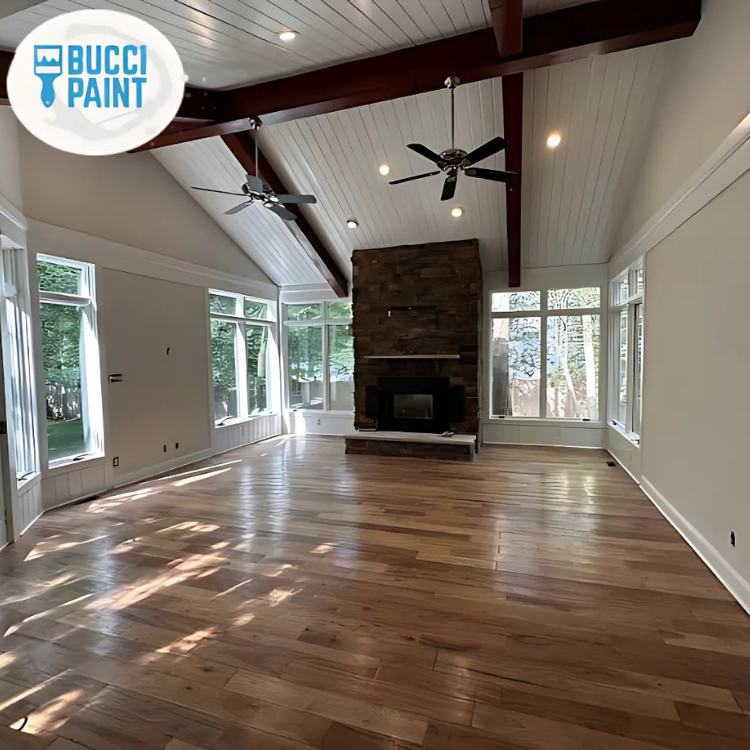
The roller marks were the first clue something had gone very wrong. The homeowners in Evesham, NJ had spent their entire Saturday painting their living room a soft gray they’d fallen in love with online. By Sunday morning, as the sun poured through the windows, they saw it: patchy walls, flashing where the drywall seams showed through, shiny spots where they’d touched up, and a faint yellow stain bleeding right back through the new paint. What was supposed to look like a magazine-ready makeover now looked like a rushed landlord repaint.
Situations like this are more common than most people realize. Interior painting looks simple from the outside: buy a few gallons, grab a roller, and you’re off. But the difference between a smooth, professional-looking finish and a frustrating, flawed result usually comes down to avoiding a handful of critical mistakes. At Bucci Paint, working in homes across Evesham and surrounding South Jersey communities, we see the same errors repeated again and again—costing homeowners time, money, and a lot of patience.
If you’re planning to refresh your walls, ceilings, or trim, understanding these interior painting mistakes to avoid at all costs can completely change your outcome. From skipping surface prep to choosing the wrong sheen for a busy hallway, each decision you make shows up in the final result. Let’s walk through the missteps that can sabotage your project and how to steer clear of them so your home actually looks as good as you imagined.
Skipping Proper Preparation
One of the most damaging mistakes is also the least glamorous: neglecting prep work. Many DIY painters in Evesham want to jump straight into rolling color, but paint is only as good as the surface beneath it. Dust, grease, old soap residue, and even fingerprints create a barrier that prevents proper adhesion. When you skip cleaning and simply paint over whatever is on the wall, you invite peeling, chipping, and uneven coverage within months, sometimes even weeks.
Walls, especially in kitchens, bathrooms, and near light switches, accumulate invisible grime. If this isn’t washed away with a mild detergent or appropriate cleaner, the new paint may separate or form fish-eyes—small circular spots where paint refuses to stick. In older homes around Evesham, where smokers once lived or where fireplaces have been used frequently, soot and nicotine can bleed through unless the surface is thoroughly cleaned and then primed with the correct sealer.
Another overlooked element of prep is repairing imperfections. Small nail pops, hairline cracks, and dents may look minor before painting, but fresh color can actually highlight them. Filling holes with spackle, sanding smooth, and spot-priming repairs is essential. If you skip this step, you’ll end up with a freshly painted wall that still looks tired and worn. Professionals like Bucci Paint spend a surprising portion of any project on patching, sanding, and caulking for exactly this reason: prep is where the quality is built.
Finally, failing to protect adjacent surfaces is a prep mistake that can leave lasting damage. Paint splatters on hardwood floors, drips on baseboards, and overspray on windows can be difficult or impossible to remove completely. Quality drop cloths, painter’s tape where appropriate, and careful masking of sensitive surfaces are not optional extras; they are fundamental to a clean, professional result.
Using The Wrong Products
Choosing paint isn’t just about picking a color chip that looks good under the store’s fluorescent lights. A very common and costly mistake is using the wrong paint type or finish for a specific room or surface. For example, applying a flat ceiling paint on a high-traffic hallway wall might look nice on day one, but within weeks you’ll see scuff marks and fingerprints that refuse to wash off. Conversely, using a high-gloss paint on imperfect walls will spotlight every patch and ripple in the drywall.
Sheen selection is especially critical. Flat and matte finishes are more forgiving on walls with flaws, but they are less washable, making them better suited for lower-traffic areas like adult bedrooms or formal dining rooms. Eggshell and satin are often ideal for living rooms, hallways, and family spaces in Evesham homes because they strike a balance between washability and subtle sheen. Semi-gloss and gloss are usually reserved for trim, doors, and sometimes bathrooms or kitchens where moisture and frequent cleaning are factors. Choosing incorrectly leads to either a wall that’s impossible to clean or one that shows every imperfection.
There is also a big difference between bargain-bin paint and quality coatings from reputable manufacturers. Cheaper paints often have less pigment and weaker binders, which means more coats, uneven color, and poorer durability. You might think you’re saving money, but when you need three or four coats to hide the old color—or when the finish starts to wear out far too soon—you’ve actually spent more in both time and materials. Professional painters like Bucci Paint know which products perform well in South Jersey’s climate and which are more marketing than substance.
In addition, ignoring specialty products can cause specific problems. For bathrooms without proper ventilation, for example, a standard interior paint may allow mildew growth, while a moisture- and mildew-resistant formula can prevent that. For previously stained or smoke-damaged surfaces, a stain-blocking primer is essential. Skipping these targeted products is a mistake that often shows up months later when stains bleed through or mildew spots appear on your “new” paint.
Ignoring Primer And Stain Blocking
Primer is one of the most misunderstood parts of interior painting. Many homeowners assume that “paint and primer in one” products eliminate the need for a separate primer, but that isn’t always true. When you’re painting over dark colors, fresh drywall, glossy surfaces, or stains, relying on a combined product alone is a major mistake. Without the correct primer, you’re likely to see uneven coverage, color variations, and persistent stains that seem to reappear after every coat.
In Evesham, a lot of older homes have walls that have been painted multiple times over the years. Some of these layers may be oil-based, glossy, or otherwise difficult for new water-based paint to grip. Applying a bonding primer designed for tricky surfaces creates a stable foundation. If you skip it, the new paint can peel, especially in areas where humidity fluctuates, like kitchens or bathrooms. The peeling often starts around trim edges or corners and then spreads, turning a simple repaint into a full remediation job.
Stain blocking is equally critical. Water leaks, smoke, marker, crayon, and even certain adhesives can bleed through regular paint. Homeowners often try to cover these with coat after coat of paint, only to see yellowish or brownish stains reemerge as the paint dries. A dedicated stain-blocking primer—often shellac- or oil-based—is designed specifically to seal these contaminants so they cannot migrate to the surface. Skipping this step is one of the fastest ways to waste expensive topcoat paint.
New drywall is another scenario where primer matters. Bare drywall and joint compound absorb paint at different rates, leading to flashing and uneven sheen if you don’t prime first. A drywall primer or high-quality primer-sealer evens out porosity so your finish coat lays down uniformly. If you’ve ever seen walls where the taped seams are slightly shinier or duller than the rest, that’s usually the result of not priming properly before painting.
Rushing The Application Process
Even with great products and thorough prep, poor application technique can ruin the final look. One of the biggest mistakes is rushing. When painters try to cover too much wall with too little paint or move the roller too fast, they create lap marks, roller lines, and thin spots that show through once everything dries. The temptation to “stretch” the paint to save money almost always backfires. You end up with uneven color and need extra coats, using more paint than you would have if you’d applied it correctly the first time.
Another frequent error is not maintaining a wet edge. As you roll paint onto the wall, you need to overlap slightly into the previously painted area while it is still wet. If you stop midway down a wall or let one section dry before continuing, you’ll see visible lines and bands of color difference. This is especially noticeable in large, well-lit rooms common in many Evesham homes. Proper planning—starting and finishing entire walls at a time, working in manageable sections, and having enough help—is crucial to avoiding this striped or patchy effect.
Cutting in (painting edges and corners with a brush) is another area where haste causes problems. When the brushed edge is allowed to dry fully before rolling the rest of the wall, it can leave a visible frame around the room. Experienced painters like those at Bucci Paint will often cut in and roll in a coordinated rhythm so the two blend seamlessly. Using low-quality brushes and rollers is a related mistake; they shed fibers, leave streaks, and hold less paint, all of which degrade the final finish.
Finally, ignoring manufacturer’s drying and recoat times is risky. If you apply the next coat before the first has properly cured, you can pull or drag the underlying layer, creating texture issues and even adhesion problems. Rooms with higher humidity or lower temperatures, which we often see in basements and some older Evesham homes, may need longer between coats. Patience here directly affects how smooth and durable your paint job will be.
Neglecting Details And Clean Lines
What separates a “good from a distance” paint job from a truly professional one is attention to detail. A common mistake is assuming that if the walls are covered, the job is done. But crooked cut lines along ceilings, sloppy edges around outlets, and unpainted gaps along trim all chip away at the overall impression. Your eye naturally goes to these transitions, and when they’re messy, the whole room feels less refined.
One issue is over-reliance on painter’s tape without proper technique. Tape can be helpful, but if it’s not pressed down firmly, paint will bleed underneath, leaving jagged edges. If it’s left on too long, removing it can peel up fresh paint. Many professionals actually use tape sparingly and instead rely on steady-handed brushwork and the right tools. When tape is used, it should be removed at the correct time and angle to avoid tearing the finish.
Another detail mistake is ignoring caulking around trim, baseboards, and window casings. Small gaps between trim and walls are common, especially in homes where settling has occurred. If these gaps aren’t caulked before painting, shadows and dark lines appear, making even new paint look unfinished. Properly applied paintable caulk fills these voids, creating a crisp, continuous line that looks clean and intentional.
Hardware and fixtures are also often overlooked. Painting around switch plates, vent covers, and door hardware instead of removing them may seem like a time-saver, but it leaves visible outlines and can lead to paint build-up on edges. Similarly, failing to protect lighting fixtures or not cutting cleanly around them can result in splatters that are hard to remove. The best-looking interiors are the ones where these small elements were treated with care from the start.
Underestimating Color And Lighting
While most people focus on avoiding technical mistakes, choosing the wrong color for the space can feel just as disastrous. A color that looked soft and neutral on a tiny paint chip at the store can turn bluish, greenish, or overly warm once it’s on four large walls in your Evesham home. One of the biggest mistakes is picking a color based solely on how it appears in the store or online, without testing it in your actual room under your actual lighting conditions.
Natural light changes throughout the day, and artificial lighting varies dramatically between warm, cool, and daylight bulbs. A gray with a cool undertone might feel calm and modern in a bright, south-facing living room but turn cold and almost institutional in a north-facing bedroom. Similarly, beiges and greiges can skew pink, yellow, or green depending on light and surroundings. Skipping sample boards or test patches and going straight to full-room application is a gamble that often ends in disappointment and repainting.
Another mistake is ignoring how colors interact with existing elements: flooring, countertops, cabinets, and large furniture pieces. In Evesham’s many homes with hardwood floors, for instance, certain wall colors can clash with the wood’s undertone, making the room feel off-balance. Professionals consider these fixed features as part of the palette rather than an afterthought. Choosing a color that harmonizes with what you already have creates a more cohesive, intentional look.
Finally, not thinking about sheen and color together can cause surprises. Darker colors in higher sheens can show more imperfections and create unwanted glare, especially under strong overhead lighting. Light colors in very flat finishes can look chalky in some spaces. Evaluating your color choices at different times of day and in different lighting scenarios is a simple step that avoids the costly mistake of hating the result once the paint dries.
Frequently Asked Questions
How do I know if my walls need primer before painting? Primer is needed in several situations: when you’re painting over a dark or bold color, when the walls have stains or water marks, when new drywall or joint compound is exposed, or when the existing paint is glossy. If you’re unsure what’s currently on your walls—common in many older Evesham homes—a quick test is to lightly sand a small area and see if the surface powders easily and if water beads up or soaks in. Glossy, slick, or heavily patched surfaces almost always benefit from a dedicated primer to prevent adhesion problems and uneven sheen.
What’s the biggest interior painting mistake homeowners make? The single biggest mistake is underestimating the importance of preparation. Skipping cleaning, patching, sanding, and priming leads to a cascade of issues: peeling paint, visible repairs, stains bleeding through, and rough textures. While color choices and technique matter, the foundation you create before opening a can of paint is what determines whether your finish will last and look professional. At Bucci Paint, a significant portion of our time in Evesham homes is spent on prep because it solves problems before they ever reach the surface.
Can I paint over glossy trim and doors without sanding? Painting directly over glossy trim or doors without proper prep is a mistake that often results in chipping and peeling. Glossy surfaces are designed to repel dirt and are also resistant to new paint. At minimum, they should be cleaned thoroughly to remove oils and dust, then scuff-sanded to break the gloss and create tooth for the new paint. In many cases, applying a bonding primer after sanding is the best approach. This combination gives your finish coat something secure to grip, significantly improving durability on frequently touched areas like doors and casings.
Why does my paint look streaky or patchy after it dries? Streaks, lap marks, and patchiness usually come from uneven application, working too slowly without maintaining a wet edge, or applying paint too thinly. Sometimes, it’s also the result of poor-quality tools or skipping primer on surfaces with varying porosity. To avoid this, use high-quality rollers and brushes, load them properly with paint, and work methodically across each wall, overlapping slightly into the still-wet area. In some cases, an additional coat is needed to even things out, but if the underlying problem is unprimed patches or stains, addressing those first is essential.
When should I call a professional instead of doing it myself?DIY can work well for small, straightforward rooms, but there are times when bringing in a professional like Bucci Paint is the smarter choice. High ceilings, extensive repairs, smoke or water damage, complex color schemes, and detailed trim work all increase the chances of costly mistakes. If your home in Evesham has areas with past leaks, heavy staining, or older finishes that might be oil-based, professional assessment and preparation can prevent serious adhesion and stain issues. And if you’re also considering related updates like trim or flooring work, it can be efficient to coordinate with services such as Deck Staining and other improvements at the same time.