
You stand in the middle of your living room, paint chips fanned out in your hand, and every wall suddenly feels like a big, blank question. The beige that seemed “safe” now looks tired. That dramatic navy you saw online feels risky. The kitchen opens into the family room, the hallway runs straight into the bedrooms, and you realize that choosing one color is actually choosing a whole palette that has to work together. What started as a simple idea – “let’s freshen things up” – turns into a surprisingly complex decision.
This is the moment many homeowners in Evesham, NJ find themselves in right before an interior painting project. Color is not just a decorative choice; it shapes how a room feels, how big it seems, how comfortable you are when you walk in after a long day. The right color can make an older home feel current, pull together mismatched furniture, and even improve how much natural light appears to pour into the space. The wrong choice can leave you repainting sooner than you expected or living with a shade that never quite feels right. That is why working through the color selection process thoughtfully – and, when possible, with a professional like Bucci Paint – matters more than most people realize.
Choosing colors for your interior painting project is both creative and technical. It involves understanding light, finishes, undertones, and how colors connect from room to room. It also means thinking about your lifestyle, your neighborhood in Evesham, and the long-term value of your home. Instead of grabbing the first color that looks good on a tiny sample, a better approach is to slow down, ask the right questions, and build a palette that will serve you for years. Let’s walk through how to do that in a practical, down-to-earth way.
Understanding How Color Behaves
Before you fall in love with a specific shade, it helps to understand that color is not static. The same paint can look completely different in a showroom, on a sample card, and on your wall at home. Natural light, artificial light, and surrounding finishes all influence what you actually see. In Evesham, NJ, where many homes have a mix of large front windows and more shaded sides, a color that feels soft and airy in the sunny living room might feel darker and cooler in a hallway with less light.
Light temperature plays a major role. North-facing rooms often receive cooler, bluer light, which can make gray or blue paints feel colder than expected. South-facing rooms get warmer light, bringing out yellows and reds in a color. West-facing rooms can shift dramatically throughout the day, looking neutral at noon and warm or even orange-toned by evening. This is why Bucci Paint often recommends looking at samples at different times of day, not just when you first open the blinds in the morning.
Then there are undertones—the subtle hints of other colors hiding beneath the surface. A “neutral” beige might lean pink, yellow, or green. A gray might skew blue, violet, or taupe. On a small paint chip, these undertones are easy to miss, but once they’re on a full wall next to your floors and trim, they become obvious. Identifying undertones is one of those skills that professional painters bring to the table, helping you avoid surprises like a gray that suddenly looks purple at night.
Finally, finish affects how color is perceived. Matte or flat finishes tend to soften color and hide imperfections, while eggshell and satin reflect more light, making colors appear slightly richer and more vibrant. Semi-gloss and gloss are usually reserved for trim and doors, where you want a crisp contrast and more durability. When you work with a team like Bucci Paint, they’ll not only help with color selection but also match the right finish to each surface so the final result looks intentional and cohesive.
Clarifying Your Goals And Style
Before choosing specific shades, it’s worth taking a step back and asking what you want your space to feel like. Are you hoping for a calm, spa-like retreat in the primary bedroom? A lively, energetic playroom? A warm, welcoming family room where everyone gathers on weekends? Color is one of the fastest ways to communicate mood, so your goals should guide your decisions from the start.
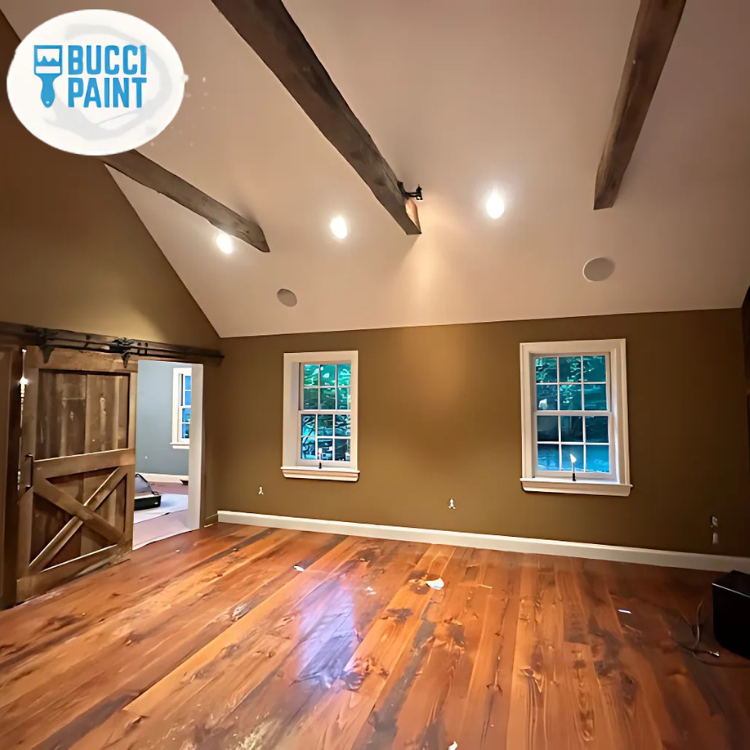
If you lean toward a clean, modern look, you might be drawn to cooler neutrals, soft whites, and a few bold accents. Traditional or transitional styles often work beautifully with warm grays, creams, and muted blues or greens. Farmhouse-inspired interiors in Evesham homes often favor warm whites, gentle grays, and earthy tones that pair well with wood floors and simple finishes. Spend a few minutes looking at your favorite rooms in magazines or online and notice the colors that show up over and over; they’re clues to your natural preferences.
Next, consider how your existing furniture and finishes will interact with new paint. Your wall color does not exist in a vacuum; it sits next to your floors, cabinets, countertops, and fabrics. If you have dark wood floors, a very dark wall might make the room feel heavy, whereas a soft neutral can balance that depth. If your kitchen cabinets are a warm off-white, a cool, bluish gray wall may clash, while a greige with similar warmth will look harmonious. Bucci Paint frequently helps Evesham homeowners build palettes that work with what they already own, saving money and avoiding the need to replace major elements.
It’s also helpful to think about how long you plan to stay in your home. If you’re settling in for many years, you can be more personal and expressive with your choices. If you might sell in the near future, sticking to versatile neutrals with personality—rather than extreme colors—can appeal to a broader range of buyers while still feeling stylish and current.
Building A Cohesive Whole-Home Palette
One of the biggest challenges is not just choosing a single color you like, but creating a palette that flows throughout the entire home. In many Evesham, NJ houses, the main level is relatively open, with sightlines that stretch from the front door through the living room, dining area, and kitchen. If each room is painted a completely unrelated color, the result can feel choppy and chaotic rather than thoughtfully designed.
A useful strategy is to start with a “foundation” color that works well in your largest or central space—often the living room or main hallway. This is typically a flexible neutral: a soft white, beige, greige, or light gray that complements your floors and trim. From there, you can branch into related colors for adjoining rooms: perhaps a slightly darker tone of the same color for the dining room, a muted blue-green that shares similar undertones for the kitchen, and a warm, welcoming tone for the entry.
Creating a palette does not mean everything must match; it means everything should coordinate. Think of it like putting together an outfit: not every piece is the same color, but they all work together. You might choose one or two accent colors that repeat in different rooms—perhaps a deep navy in the powder room, on a built-in bookcase, or as an accent wall behind the bed. By repeating certain hues in different ways, your home feels intentional and unified rather than random.
Bucci Paint often helps homeowners map out this whole-home palette room by room, paying attention to where you stand and what you see. If you can see the dining room wall from the living room sofa, those colors should have a relationship. If the upstairs hallway overlooks the foyer, those spaces should feel like they belong to the same story. This planning step can make the difference between a home that feels “nice” and one that feels thoughtfully curated.
Considering Light, Room Function, And Traffic
Each room in your home serves a different purpose, and your color choices should reflect how the space is used. Bedrooms, especially primary bedrooms, often benefit from softer, more restful colors: gentle blues, muted greens, warm off-whites, or light taupes. These colors encourage relaxation and can make mornings and evenings feel more peaceful. In contrast, a home office might benefit from a color that supports focus, such as a balanced gray, a subdued green, or even a deep, sophisticated blue on one wall.
In high-traffic areas like hallways, stairwells, and mudrooms, practicality becomes just as important as aesthetics. You may want colors that are forgiving of scuffs and fingerprints, paired with durable, washable finishes. Slightly darker neutrals or mid-tone colors can be friendlier to everyday wear and tear than pure white. Bucci Paint’s crews are familiar with the realities of busy households in Evesham—kids, pets, sports gear—and can steer you toward colors and finishes that hold up without looking dull.
Lighting type is another major factor. Many homes use a mix of LED, incandescent, and natural light, each of which changes how a color reads. Warm white bulbs can enhance cozy hues but may exaggerate yellow undertones. Cool white bulbs can sharpen a crisp white but make some neutrals feel sterile. Before finalizing a color, it’s wise to look at larger samples in the actual room under the lighting you use most. Professional painters can even apply test patches in strategic spots so you can live with them for a day or two before making your final call.
Bathrooms and kitchens add an extra layer of complexity because of tile, countertops, and cabinetry. A wall color that looks great in isolation may fight with the veining in your marble or the undertone of your granite. In these spaces, it often works best to pull a quiet color from the existing materials—perhaps a soft gray from the countertop or a warm cream from the tile—and use that as the wall color. This creates a sense of cohesion and makes the entire space feel custom, not pieced together.
Testing, Sampling, And Avoiding Common Mistakes
One of the most common mistakes homeowners make is choosing a color based solely on a small paint chip or a photo online. Real walls are large surfaces, and colors interact with their environment in ways that tiny samples simply cannot show. This is why sampling is such a critical step. Instead of guessing, you can see exactly how a color looks on your walls in your home.
A practical approach is to narrow your choices to two or three contenders for each room. Then, either purchase sample pots or ask your painter to apply sample swatches in a few key areas: near windows, in corners, and on walls opposite major light sources. Paint larger patches—at least a couple of feet wide—so you can get a realistic sense of the color. Over the next day or two, observe those patches in morning light, midday light, and evening light. You may be surprised by how your preferences change at different times.
Another frequent mistake is ignoring the trim and ceiling. Pure, bright white is not always the best choice. A slightly warmer or softer white on trim can be more forgiving and more flattering to wall colors, especially in older homes. Ceilings painted in a standard ceiling white can sometimes feel disconnected from warmer walls. Coordinating these elements thoughtfully—something Bucci Paint does regularly—can subtly elevate the entire look of a room.
Finally, avoid choosing every color in a single rushed visit to the paint store. Color fatigue is real. After you’ve looked at dozens of options, they start to blur together. Break the process into stages: decide on your main neutral first, then branch out to accent rooms. Give yourself time between decisions so you can revisit them with fresh eyes. A professional painter familiar with homes in Evesham, NJ can help keep the process organized and prevent you from feeling overwhelmed.
Working With Professionals In Evesham, NJ
While it’s entirely possible to choose colors on your own, there is significant value in partnering with a professional painting company that understands both color and construction. Bucci Paint has worked in a wide range of homes across Evesham and the surrounding communities, from newer developments to older properties with more character. That experience means they’ve seen how certain colors behave in local lighting conditions and how popular palettes look once they’re actually on the walls.
Professionals also bring a trained eye to the details that often trip homeowners up. They can point out undertones quickly, suggest slight shifts that make a color more compatible with your finishes, and recommend where to use accent colors versus where to stay neutral. Instead of you guessing whether a certain warm gray will clash with your oak floors, they can draw on years of experience to guide you toward a better option.
Beyond interiors, many homeowners eventually want their exterior to coordinate with their refreshed interior style. When that time comes, it’s helpful to work with a company that can handle both sides of the equation. Bucci Paint provides services that extend outdoors as well, including Exterior painting, so your home can feel cohesive from curb to couch.
Perhaps most importantly, working with a professional painting crew means the colors you choose are applied correctly. Even the best color can look disappointing if the surface prep is poor or the coverage is uneven. Clean lines at the ceiling, smooth walls, and properly painted trim all influence how your chosen palette reads in real life. When color selection and expert application come together, the result is a home that feels refreshed, intentional, and uniquely yours.
Frequently Asked Questions
How do I start choosing colors if I feel completely overwhelmed? Begin by identifying one room that matters most to you—often the living room or kitchen—and decide how you want that space to feel: calm, energetic, cozy, or bright. Look at a few inspiration photos and notice the colors that repeat. From there, choose a versatile neutral for that main room and test two or three similar shades on the wall. Once you find a neutral you love, it becomes your anchor, and you can build the rest of your home’s palette around it with help from a professional like Bucci Paint.
Should I use the same color throughout my entire house? Using a single color everywhere can create a very unified, airy look, and it’s a good approach for smaller homes or very open floor plans. However, most Evesham homeowners prefer some variation to give each room its own personality. A common strategy is to use one main neutral in hallways and central spaces, then introduce complementary colors or slightly darker/lighter versions of that neutral in bedrooms, dining rooms, and offices. This keeps things cohesive while still adding interest and depth.
How many colors are too many in one home? There is no strict rule, but a practical guideline is to limit yourself to a core palette of about three to five main colors, plus trim and ceiling colors. These main colors can include different shades within the same color family. When you go far beyond that, especially in an open layout, the home can start to feel visually fragmented. A professional painter can help you refine your choices so you have enough variety without sacrificing flow.
What if the color I chose looks different once it’s on the wall? This happens more often than people think, which is why sampling is so important. If you’ve already painted and the color is not what you expected, consider first whether changing the light bulbs or adding different furnishings helps. If it still doesn’t feel right, talk with your painter about adjusting the color slightly—perhaps choosing a similar shade that is a bit warmer, cooler, lighter, or darker. Bucci Paint can often recommend small shifts that make a big difference without completely rethinking your entire palette.
Do popular color trends matter when choosing my interior paint? Trends can be useful for inspiration and for keeping your home feeling current, but they should not override your personal taste or how you use your space. A color that is “in” this year might not suit the light in your Evesham home or your existing finishes. It’s usually best to let trends influence accents and smaller spaces, while keeping main areas in timeless, flexible colors. That way, your home feels fresh but not locked into a look that will feel dated in a few years.