Deck Painting: Preparing for Seasonal Wear

Deck Painting: Preparing for Seasonal Wear

On a hot July afternoon in Evesham, NJ, you can almost feel your deck aging. UV rays beat down, sudden thunderstorms roll through, and by October you’re sweeping piles of leaves off boards that already look tired. Then winter hits, and freeze–thaw cycles work their way into every tiny crack. By spring, what was once a rich, smooth finish can look dull, chipped, or even unsafe.

South Jersey’s mix of humid summers, heavy rain, and icy winters is tough on exterior wood. A neglected deck can lose up to 50% of its finish performance in just a couple of seasons, according to industry testing. That’s not just about looks—it’s about splinters, rot, and structural damage.

This guide walks you through how to prepare your deck for seasonal wear so it lasts longer, looks better, and stays safer. You’ll learn how to assess your deck’s condition, choose between Deck Painting and staining, prep like a pro, and time your projects around New Jersey’s weather patterns. You’ll also see real examples from right here in the Evesham area and pick up practical tips you can use this year.

Key Insight: Thoughtful prep and the right coating system can easily double the life of your deck finish in South Jersey’s climate—saving you money, time, and headaches season after season.


Understanding Seasonal Stress on Your Deck in South Jersey

Your deck doesn’t just age over time; it ages by season. Each part of the year in Evesham brings its own kind of punishment, and understanding that helps you protect your investment.

How the Seasons Break Down Your Deck

  • Spring: Constant moisture, pollen buildup, and rapid temperature swings.
  • Summer: Intense UV exposure, high humidity, and heavy foot traffic.
  • Fall: Wet leaves, organic debris, and early freezes.
  • Winter: Snow, ice, road salt, and repeated freeze–thaw cycles.

Over and over, these conditions break down coatings, open up wood grain, and allow water to penetrate.

“UV exposure is the number-one enemy of exterior wood, closely followed by standing moisture.” — Coatings Manufacturer Technical Bulletin

In South Jersey, it’s common to see:

  • Faded color and hairline cracks after just 1–2 summers.
  • Peeling paint on horizontal surfaces by year 3 if prep was poor.
  • Soft spots or early rot around posts and stair treads within 5–7 years.

Local Example: A Tired Deck Off Route 70

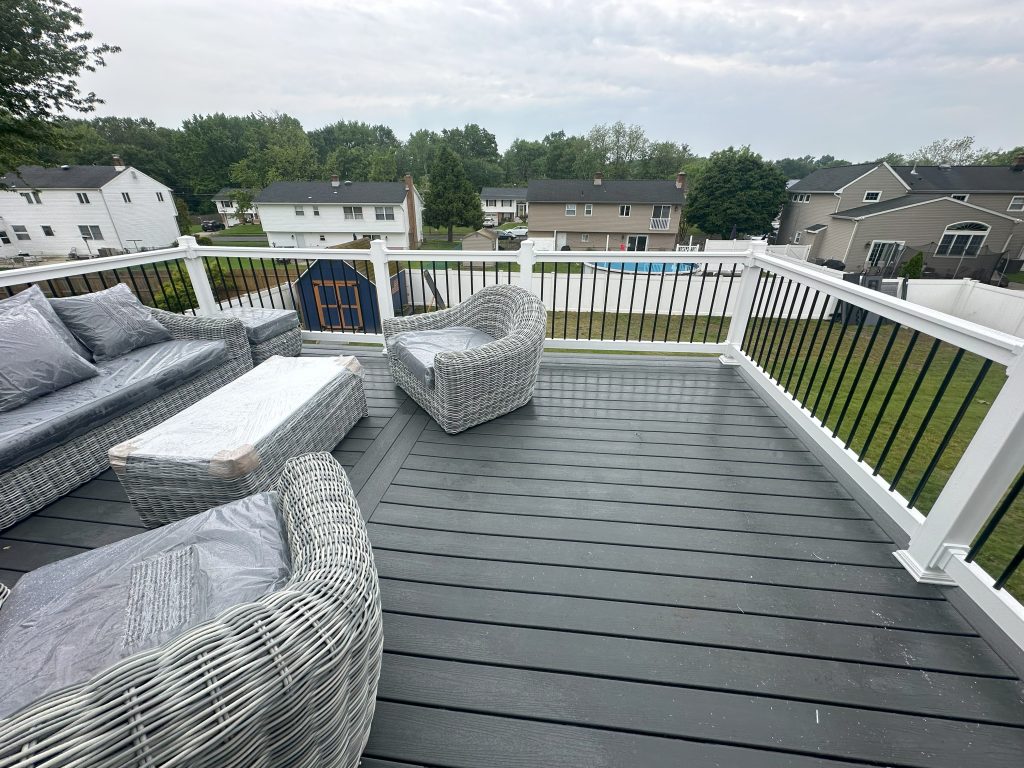
A homeowner near Marlton Square called because their 8-year-old pressure-treated deck looked 20 years old. The boards were cupped, the stain had worn off in traffic areas, and water pooled near the steps.

The main culprits?

  • An original coating that wasn’t rated for high UV.
  • No maintenance coats in over five years.
  • Poor drainage and clogged gaps between boards.

After a full strip, repair, and new coating system, the deck not only looked new but shed water properly. The owner now follows a simple yearly inspection routine, and the finish is holding up beautifully through Evesham’s changing seasons.

Tip: Walk your deck after a heavy rain. Anywhere water lingers more than 30 minutes is a problem area that needs attention.

CALLOUT: Seasonal damage is predictable—and preventable—if you understand what each time of year is doing to your deck.


Paint vs. Stain: Choosing the Right Protection for Your Deck

One of the biggest decisions you’ll make is whether to go with Deck Staining or painting. Both can work well in Evesham’s climate, but they behave differently over time.

How Paint and Stain Handle Seasonal Wear

Paint forms a film on top of the wood, creating a solid barrier. Stain penetrates into the wood fibers, especially semi-transparent and transparent formulas. That difference affects:

  • How they peel or wear
  • How often you need maintenance
  • What seasonal abuse they tolerate best

Here’s a quick comparison tailored to South Jersey conditions:

Feature/Factor Deck Painting (Solid) Deck Staining (Semi-Transparent/Transparent)
UV Protection Excellent Good to Very Good (depends on opacity)
Moisture Resistance Very good if film is intact Good; relies on penetration and repellent additives
Appearance Over Time Can peel or blister if water gets underneath Typically wears and fades gradually
Maintenance Cycle (local average) 5–7 years with proper prep 2–4 years for semi-transparent; 3–5 for solid stains
Best For Older or mismatched boards; dramatic color changes Showcasing wood grain; newer decks
Winter Performance Strong, but vulnerable where film is compromised More forgiving in small wear spots

Real-World Choice: Evesham Deck on a Busy Family Home

A family near Van Zant Elementary had an older deck with several board replacements over the years. The color varied from board to board, and they wanted a clean, uniform look that tied into their recent Interior painting project.

We recommended a solid deck paint system:

  • It hid old stains and mismatched boards.
  • It gave them bold color options to complement their siding.
  • It provided strong UV protection for the full-sun backyard.

For another client near the Black Run Preserve with a newer cedar deck, a high-quality penetrating stain was the better choice to highlight the wood grain while still protecting against moisture and UV.

Tip: If your deck has lots of previous coatings, paint or solid stain is often the most practical way to restore a clean, consistent look.

CALLOUT: There’s no one-size-fits-all choice. The right product depends on your deck’s age, condition, sun exposure, and how you want it to look in three years—not just next month.


Inspection and Repairs: The Foundation of a Long-Lasting Finish

Before you think about color charts or product labels, your deck needs a thorough health check. Coatings only last as long as the surface underneath them.

Step-by-Step Seasonal Inspection

Walk your deck with a pencil or screwdriver and pay close attention to:

  • Soft spots: Press into boards around stairs, posts, and rail bases.
  • Loose fasteners: Wobbly railings, popping nails, or squeaky steps.
  • Cracked or cupped boards: These collect water and speed up failure.
  • Gaps and drainage: Look for clogged spaces between boards.
  • Previous coating condition: Peeling, flaking, and bare patches.

“Most coating failures trace back to surface movement and moisture—not the product itself.” — Industry Coatings Consultant

Local Example: Repair Before Recoat in Kings Grant

In Kings Grant, we inspected a deck where the homeowner wanted quick Deck Repainting before a graduation party. On the surface, it looked like a simple refresh. Closer inspection showed:

  • Several loose rail posts.
  • A couple of rotting stair treads.
  • Deep cracks in high-traffic boards.

We recommended targeted repairs before any coating work:

  • Replacing compromised boards.
  • Re-securing and reinforcing rails.
  • Sanding down severe splinters and cupping.

Skipping this step might have saved a few days, but the new finish would have failed within a season or two as the damaged wood continued to move and deteriorate.

Tip: If you’re unsure whether a board is still sound, try driving a small screw into it. If the wood crumbles or doesn’t hold, it’s time to replace.

This is also where complementary services can matter. For example, if your deck ties into a stucco or masonry patio, coordinating with masonry and stucco coatings work can solve moisture problems at the same time.

CALLOUT: A day spent on inspection and minor repairs can add years to the life of your deck finish—and reduce the risk of safety issues for your family or customers.


Surface Preparation: The Step You Can’t Afford to Rush

Once repairs are complete, the real difference between a short-lived and long-lasting deck coating comes down to prep. In Evesham’s climate, where moisture and temperature swings are constant, surface prep is everything.

Cleaning: More Than Just a Quick Wash

Proper cleaning removes:

  • Dirt and pollen that interfere with adhesion.
  • Mildew and algae that can grow under coatings.
  • Old, failing finishes that prevent new products from bonding.

Typical professional prep might include:

  • Low-pressure washing with a deck cleaner.
  • Spot treatment for mildew.
  • Stripping agents where old coatings are heavy or failing.
  • Light sanding to smooth raised grain and remove loose fibers.

For a homeowner off Kresson Road, we found that their previous DIY “refresh” had been applied over pollen and mildew. Within a year, the new coating was peeling in patches. We stripped the surface, cleaned thoroughly, and allowed appropriate dry time before recoating. Three years later, their deck still looks fresh despite full sun and heavy use.

Tip: After washing, tape a small piece of clear plastic to the deck for a few hours. If condensation forms underneath, the wood is still too wet to coat.

Moisture, Temperature, and Timing in NJ

Manufacturers specify ideal application conditions for a reason:

  • Surface and air temperature (often between 50°F and 90°F).
  • No rain in the forecast for a specific window.
  • Limited direct sun during application.

In South Jersey, that often means:

  • Spring and early fall are prime seasons.
  • Avoiding midday summer heat and humidity.
  • Watching for overnight dew that can interfere with curing.

If you’re already planning Exterior painting on your home, aligning deck work with that schedule can help you make the most of favorable weather windows and minimize disruption.

CALLOUT: The best coating in the world can’t overcome a damp, dirty, or poorly prepared surface. Prep is where professional standards make the biggest difference.


Choosing Products and Systems That Stand Up to New Jersey Weather

Not all deck coatings are created equal—especially when you factor in South Jersey’s specific conditions. Product choice should be driven by exposure, use, and maintenance expectations.

Key Factors to Consider

  • Sun Exposure: Full-sun decks near open yards or pools need stronger UV resistance.
  • Moisture Exposure: Shaded, tree-lined yards in Evesham see more mildew and longer drying times.
  • Foot Traffic: Entertaining spaces and commercial decks need tougher, more durable systems.
  • Previous Coatings: You’re often limited by what’s already on the deck.

For a busy restaurant patio near Marlton, for example, we specified a high-build, non-slip system designed for commercial use, similar to what we might recommend in some commercial painting projects. It offered:

  • Enhanced abrasion resistance.
  • Better grip in wet conditions.
  • A maintenance plan built around seasonal closures.

For homeowners, we often create a “system” rather than a single product choice:

  • Cleaner and brightener.
  • Primer (if needed for paint or certain woods).
  • Topcoat (stain or paint).
  • Maintenance cleaner and spot-repair plan.

Traditional vs. Modern Deck Protection Approaches

Approach Type Traditional DIY Approach Modern Professional System
Product Selection Single off-the-shelf stain or paint Coordinated system (cleaner, primer, topcoat)
Focus Color and immediate appearance Longevity, adhesion, and seasonal performance
Application Considerations Weather “good enough” Temperature, humidity, and surface moisture
Maintenance Plan Recoat when it looks bad Scheduled inspections and touch-ups
Expected Performance (local) 1–3 years before major issues 4–7 years between major recoats
Tip: Look for products with clear, published data on UV resistance, moisture protection, and recommended maintenance cycles—these are more than just marketing claims.

CALLOUT: A well-chosen product system tailored to your deck and exposure can cut your long-term costs significantly, even if the upfront investment is a bit higher.


Building a Seasonal Deck Maintenance Plan

A single painting or staining project won’t protect your deck forever. What really guards against seasonal wear is a simple, consistent maintenance routine.

A Practical Yearly Deck Care Calendar for Evesham

Early Spring (March–April)

  • Inspect for winter damage: cracks, heaving, loose rails.
  • Clean off winter debris and check drainage.
  • Schedule any major carpentry services or repairs needed.

Late Spring (April–May)

  • Deep clean: remove mildew, pollen, and dirt.
  • Plan any coating work around upcoming weather windows.
  • Address minor touch-ups if the main finish is still sound.

Mid–Late Summer (July–August)

  • Quick wash to remove dirt and food spills from entertaining.
  • Check high-traffic areas for early wear.

Fall (September–October)

  • Clear leaves regularly to prevent staining and moisture traps.
  • Final inspection before winter: secure loose boards, spot seal exposed areas.
  • Consider a light maintenance coat if the deck is due.

Winter (as needed)

  • Gently remove snow with plastic shovels.
  • Avoid heavy use of de-icing salts on the deck surface.

Local Example: A Low-Stress Maintenance Plan in Evesham

A homeowner near the Promenade at Sagemore wanted a “set it and forget it” approach. We:

  • Completed a full prep and coating in late spring.
  • Provided a simple two-page maintenance guide.
  • Scheduled yearly inspections to coincide with other work like trim and door installation inside the home.

Three years in, their deck still looks great, and their yearly “maintenance” is basically a couple of hours of cleaning and minor checks.

Tip: Put deck checks on your calendar the same way you schedule HVAC maintenance or gutter cleaning. Consistency beats intensity.

CALLOUT: You don’t need a complicated plan—just a consistent one that aligns with South Jersey’s seasonal patterns.


What This Means for Homeowners in Evesham, NJ

Evesham is a great place for outdoor living. Between backyard barbecues, kids’ birthday parties, and quiet evenings on the deck, that space works hard for you. The same climate that makes for lush green summers, though, is brutal on exterior wood.

Local weather data shows:

  • Over 100 days of measurable precipitation per year.
  • High summer humidity that slows drying and encourages mildew.
  • Regular freeze–thaw cycles that push moisture deeper into unprotected wood.

For you, that means:

  • Decks need more than a one-time stain to stay safe and attractive.
  • Ignoring small issues—like a little peeling near the stairs—can snowball into major repairs.
  • Coordinating deck work with other projects, like Residential Interior Painting or exterior upgrades, can save time and money.

When you treat your deck as part of your home’s overall exterior system, rather than an afterthought, you:

  • Extend the life of your investment.
  • Improve curb appeal and resale value.
  • Create a safer, more enjoyable space for family and guests.

And because Evesham sits in that zone between coastal and inland climate, choosing products and schedules that respect our specific weather patterns is essential. What works in a drier region won’t necessarily hold up here.


Frequently Asked Questions

Q: How often should I repaint or restain my deck in Evesham’s climate?
A: For most decks in South Jersey, a realistic expectation is every 2–4 years for semi-transparent stains and every 4–7 years for solid Deck Painting, assuming proper prep and quality products. Full-sun decks or high-traffic areas may need touch-ups sooner, especially on stairs and rail tops. The best approach is to inspect annually and address early wear before it turns into widespread failure. Light maintenance coats applied on time are faster and less expensive than waiting until the deck looks completely worn out.


Q: Is painting a deck a bad idea compared to staining?
A: Not necessarily. Paint and Deck Staining each have strengths. Paint offers stronger UV protection and can completely transform the look of an older deck, especially if boards are mismatched or stained. The trade-off is that paint can peel if moisture gets underneath, which makes prep and ongoing maintenance critical. Stain, especially penetrating types, tends to wear more gracefully but may require more frequent refreshes. The right choice comes down to your deck’s condition, sun exposure, and your long-term expectations.


Q: Can I just pressure wash and recoat my deck myself?
A: You can, but there are some risks. High-pressure washing can damage wood fibers, leading to a fuzzy surface that doesn’t hold coatings well. If old finishes, mildew, or contaminants aren’t fully removed, new coatings can fail within a season. Professionals use controlled pressure, specialized cleaners, and sometimes stripping products to get a clean, sound surface. They also check moisture content and weather conditions before applying products. If you do it yourself, be sure to follow manufacturer guidelines carefully and avoid overly aggressive washing.


Q: My deck has areas of rot and loose railings. Should I fix that before painting?
A: Absolutely. Coatings are not a substitute for structural soundness. Rot, loose rails, and soft boards are safety issues and will continue to deteriorate under any finish. Addressing those problems first—through board replacement, railing reinforcement, or other carpentry services—creates a stable base for new coatings. Otherwise, movement and moisture in the damaged areas will cause even high-quality paint or stain to fail prematurely.


Q: What’s the best time of year in South Jersey to have my deck painted or stained?
A: In Evesham, the sweet spots are usually late spring (April–June) and early fall (September–October). During these windows, temperatures are moderate, humidity is more manageable, and there’s a better chance of getting several dry days in a row. Summer can work too, but early morning or late afternoon applications are often safer to avoid hot surfaces and fast drying that can affect adhesion. Winter is usually not ideal due to cold temperatures and moisture, though prep and planning can still happen then.


Q: How does deck work fit with other painting or remodeling projects?
A: Coordinating your deck project with other exterior or interior work can be smart. For example, if you’re planning Exterior painting for your siding or trim, it’s efficient to schedule deck coating in the same weather window. Inside, projects like Residential Interior Painting, drywall repair, or drywall installation and repair can be timed so you’re making the most of each season. A coordinated plan reduces disruption and can sometimes lower overall costs by combining mobilization and prep efforts.


Q: How do I know if my deck needs a full strip or just a light sanding and recoat?
A: If your current finish is mostly intact, with only minor fading or wear, a thorough cleaning and light sanding may be enough before recoating. However, if you see widespread peeling, deep cracking, multiple layers of old product, or incompatible coatings (for example, trying to apply stain over old paint), a full strip is usually the better long-term solution. In Evesham’s climate, where moisture is a constant factor, starting fresh with a stable, clean surface can dramatically improve how long your new finish lasts.


Ready to Get Started?

South Jersey’s seasons aren’t going to get any gentler on your deck. If anything, swings in temperature and precipitation have become more unpredictable in recent years. That makes thoughtful planning and professional-quality work more valuable than ever.

If your deck is already showing signs of wear—peeling, graying boards, soft spots around the stairs—this is the ideal time to act. Addressing issues before another cycle of summer sun and winter freeze–thaw can save you from more extensive repairs down the road. Whether you need a full strip and repaint, a fresh stain, or integrated work alongside Exterior Painting or other home improvements, a tailored plan will give you a deck that looks great and lasts.

Bucci Paint has been helping Evesham homeowners protect and beautify their decks and exteriors for years, with a focus on preparation, quality products, and local weather expertise. The next step is simple: schedule an on-site evaluation so you know exactly what your deck needs before the next season hits.

About Bucci Paint

Bucci Paint is a locally rooted painting and remodeling company serving Evesham, NJ and surrounding South Jersey communities. Our team specializes in Interior painting, Exterior painting, deck coatings, drywall repair, and related carpentry and finishing work. With years of hands-on experience in this specific climate, we focus on long-lasting results, clear communication, and respectful service in your home. To learn more about our services and approach, visit Bucci Paint’s website.

Leave a Comment

Your email address will not be published. Required fields are marked *